Project Overview
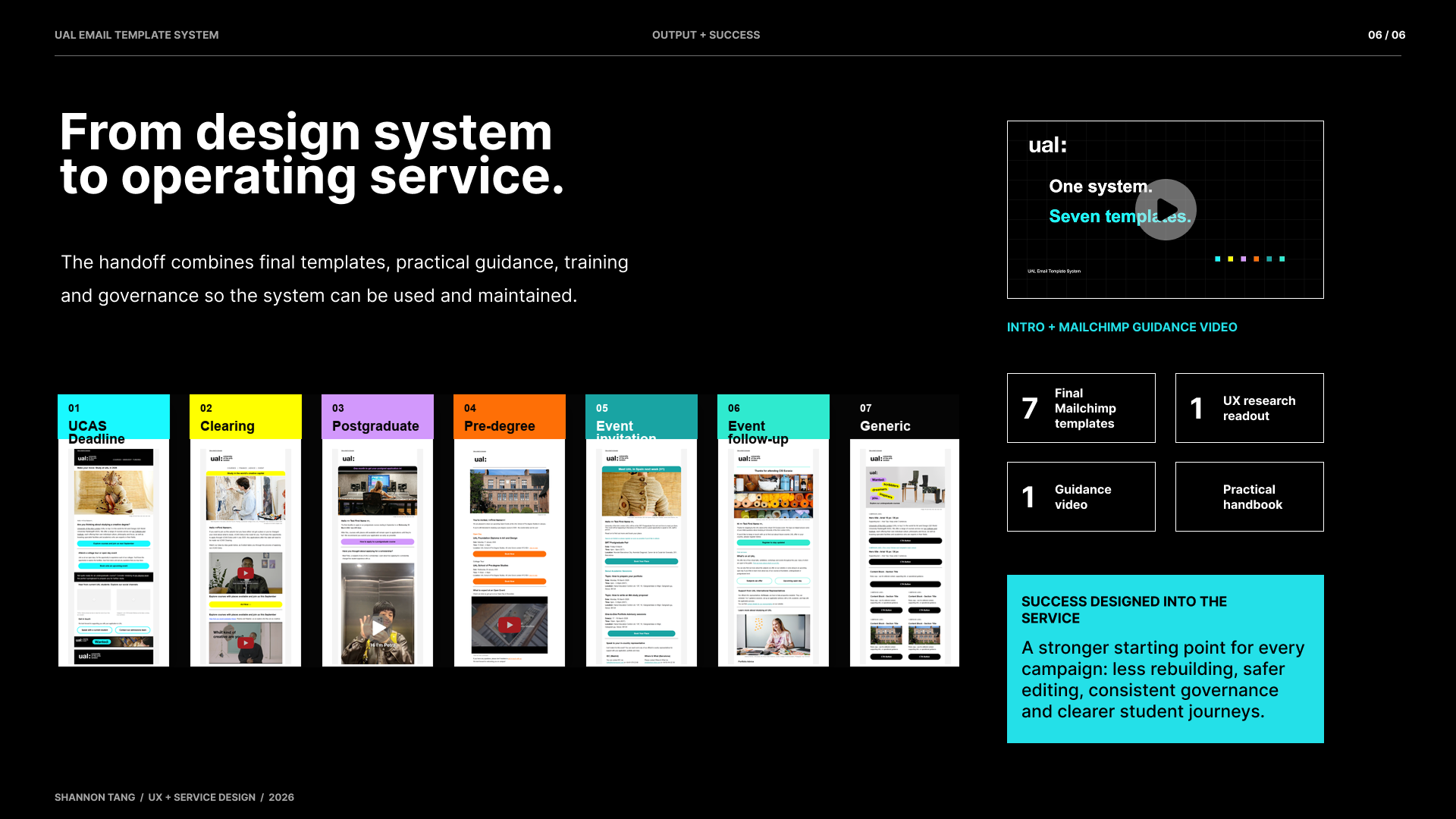
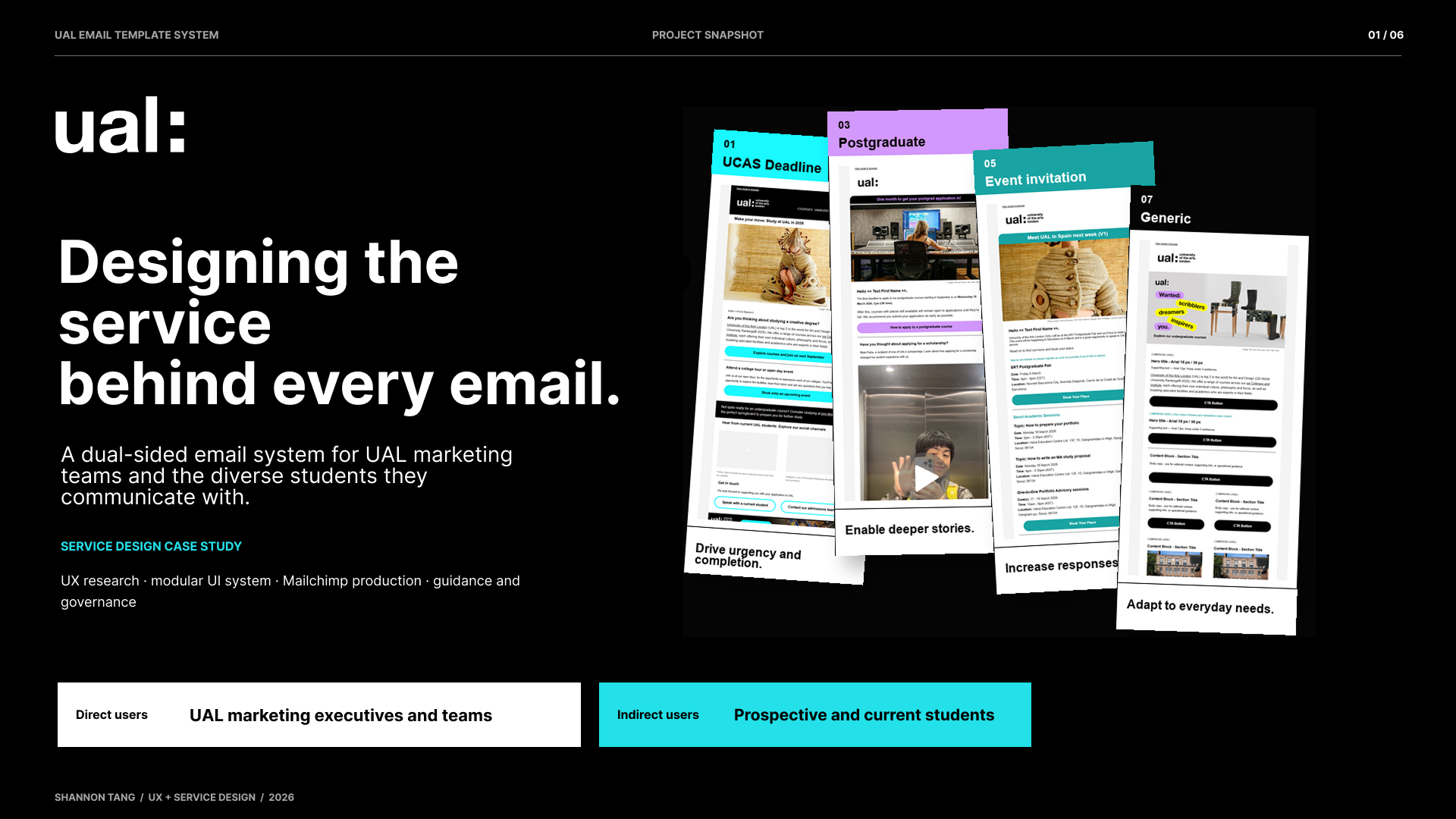
UAL’s email service supports two connected experiences. Marketing teams need to brief, build, review and send campaigns efficiently; the diverse students receiving those emails need to scan, understand, trust and act on the information with confidence.
Rather than treating the brief as a request for isolated templates, I approached it as a service-design challenge. The work connected internal production behaviour, technical constraints and student-facing communication needs, then translated those findings into a shared framework and seven goal-based Mailchimp templates.
One Service, Two Connected Experiences
The quality of the internal production journey shapes the experience that reaches every student inbox. The design challenge was to improve efficiency and accuracy for UAL marketing teams without reducing flexibility, while strengthening clarity, accessibility and conversion for a diverse international audience.
Research and Definition
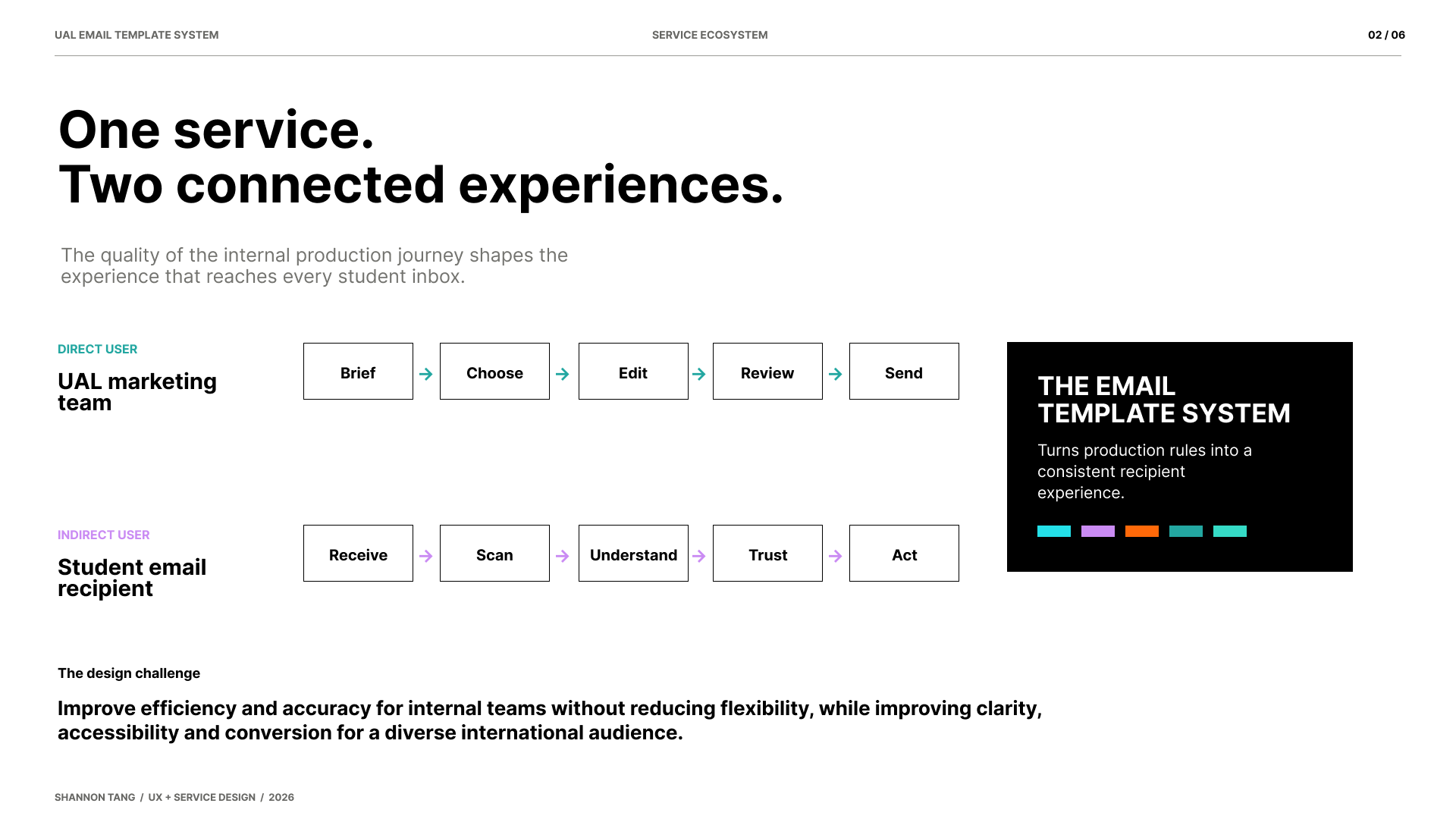
Stakeholder research across Home Recruitment, International, Undergraduate and Postgraduate teams reframed the brief from templates to a service. The research examined how campaigns are created, approved and reused; which modules and CTA patterns support each communication goal; and which accessibility, regional and technical constraints matter.
Four principles guided the system:
- Consistency: a shared foundation improves recognition and maintenance.
- Flexibility: campaigns still need distinct content density and emphasis.
- Accessibility: mobile reading order, contrast and fallbacks are core rules.
- Governance: teams need approved masters, safe editing and controlled updates.
System Intervention
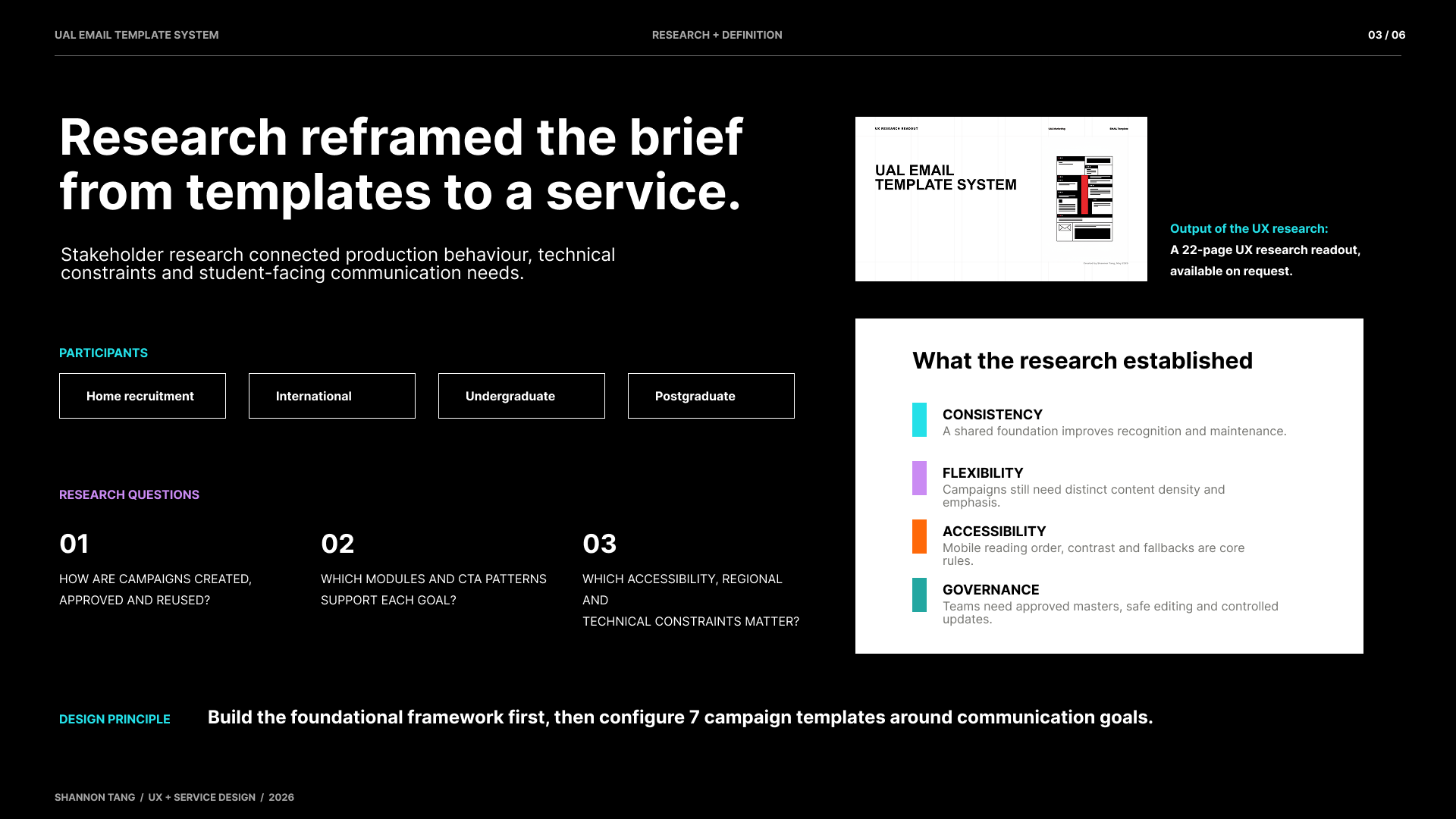
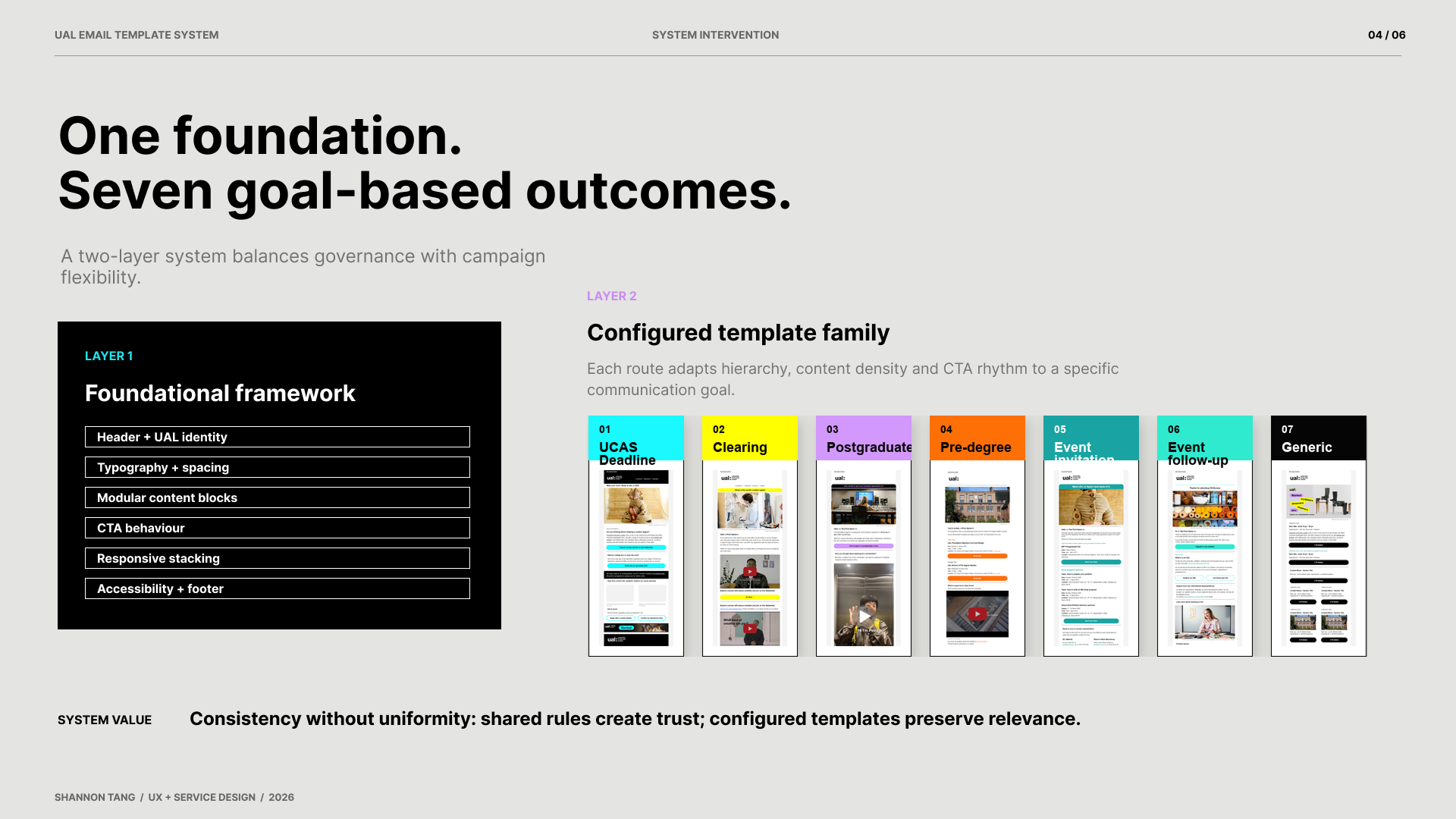
The solution uses two layers. A foundational framework defines UAL identity, typography, spacing, modular content blocks, CTA behaviour, responsive stacking, accessibility and footer rules. Above it, seven configured templates adapt hierarchy, content density and CTA rhythm to specific communication goals: UCAS deadline, Clearing, Postgraduate, Pre-degree, Event invitation, Event follow-up and Generic.
Designed for the Editor, Experienced by the Student
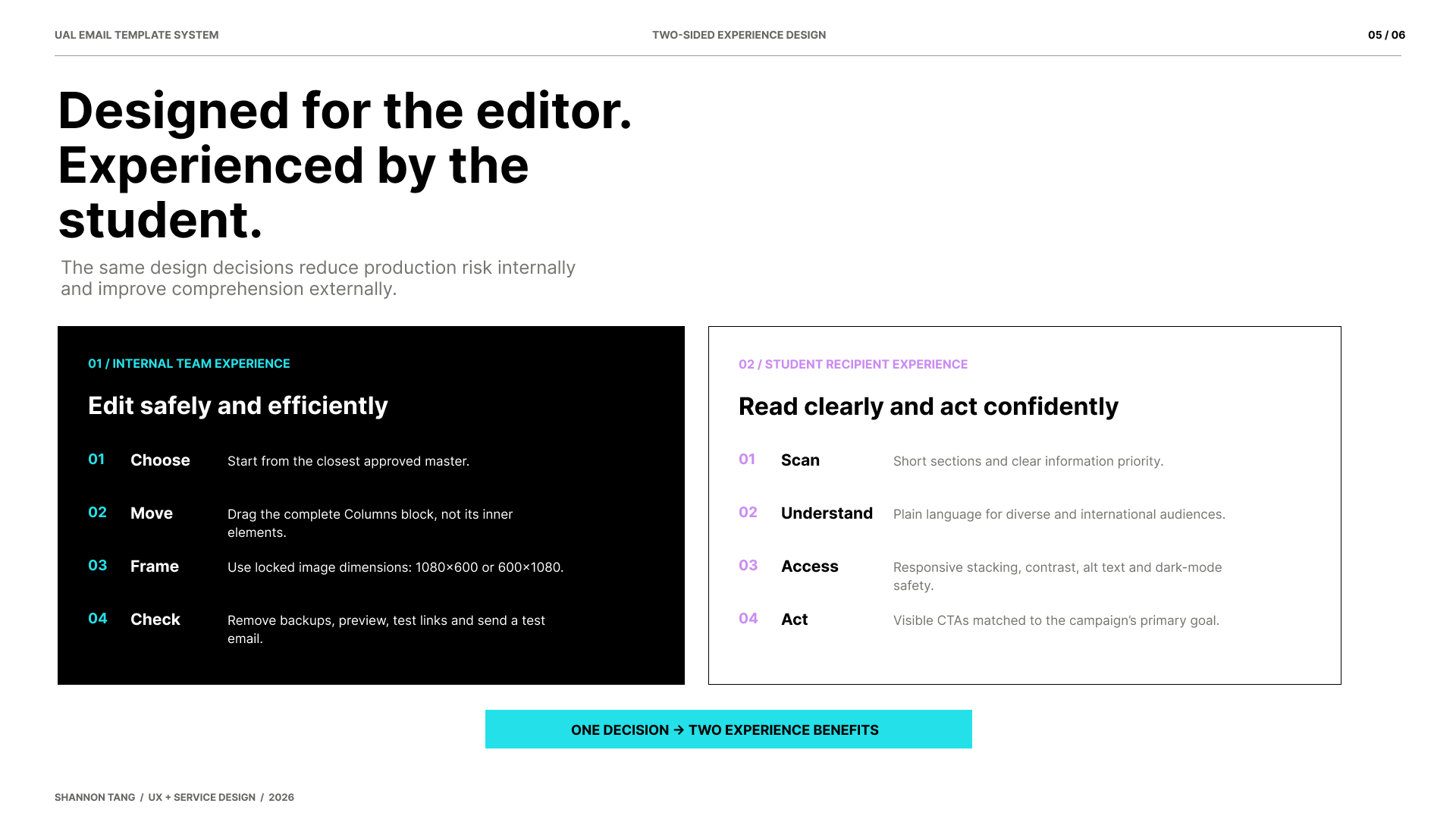
For internal teams, the system provides approved starting points, safer movement of complete Mailchimp blocks, consistent image framing and a practical pre-send checking process. For students, the same decisions create short scannable sections, clearer information priority, plain language, accessible responsive behaviour and visible CTAs matched to each campaign’s primary goal.
Output and Handoff
The final handoff moved beyond a design system toward an operating service. It combined seven final Mailchimp templates with a practical handbook, an introduction and guidance video, and a QA and governance model so the system could be adopted, maintained and improved over time.
The result gives every campaign a stronger starting point: less rebuilding, safer editing, more consistent governance and clearer student journeys.