Please switch to light mode for a better experience.
Intro
A sports simulation video game designed to encourage movement at home through a balance board experience.
Game Concept
Inspiration
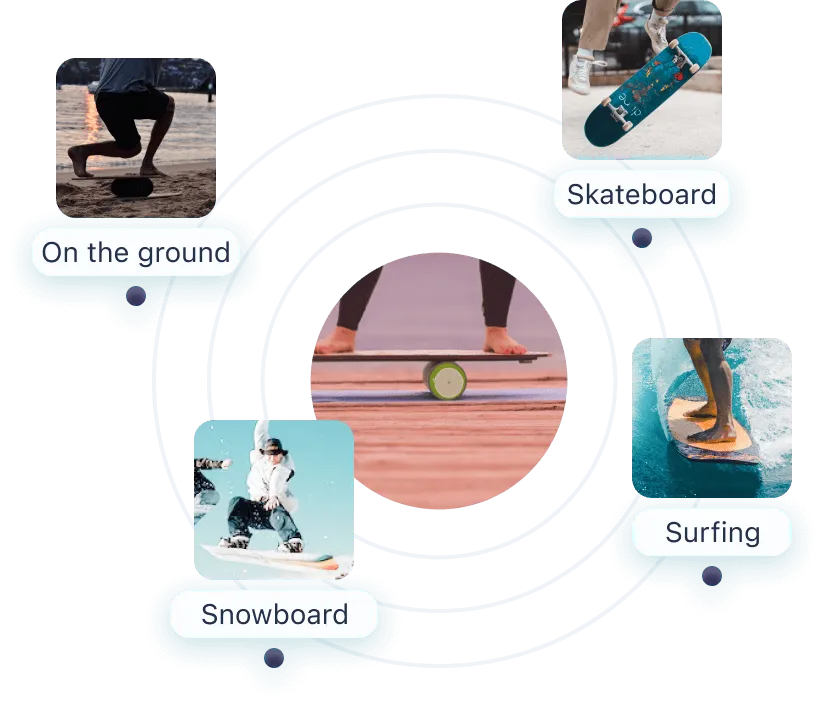
Since a balance board shares qualities with a skateboard, surfboard, and snowboard, I imagined a game that could simulate a variety of outdoor experiences from home.
In addition to realistic outdoor environments, virtual scenes could expand the player’s imagination and create a stronger desire to explore.
Scene Concept
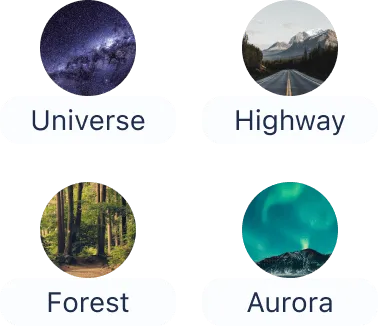
The game environment combines an indoor physical setup with projected virtual landscapes.
Players can choose from multiple outdoor-inspired worlds while staying at home.
Music: So Good by LiQWYD
Ideation
Device
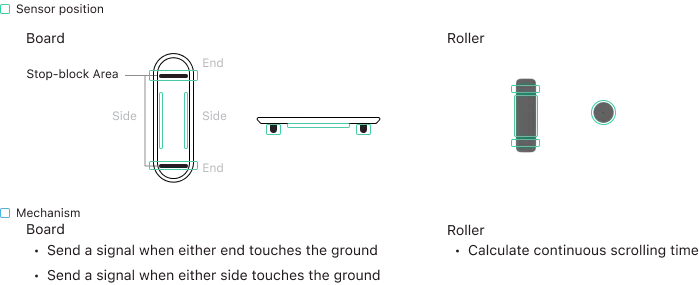
The game is designed to work with both a controller and a balance board equipped with sensors.

Sensors are placed on both the balance board and the roller.
During movement, contact between the board and the roller is detected and translated into gameplay input.
VR Experiment
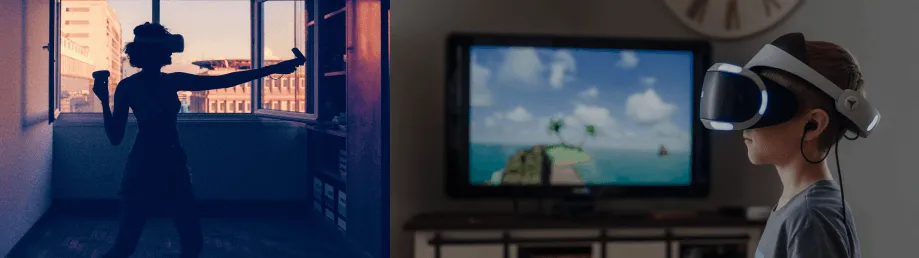
In addition to using a monitor or projected screen, players could also experience the game with a VR device.

Moodboard
Colours and visual directions were extracted from the different environments and keywords associated with balance, movement, and exploration.

Game Interface
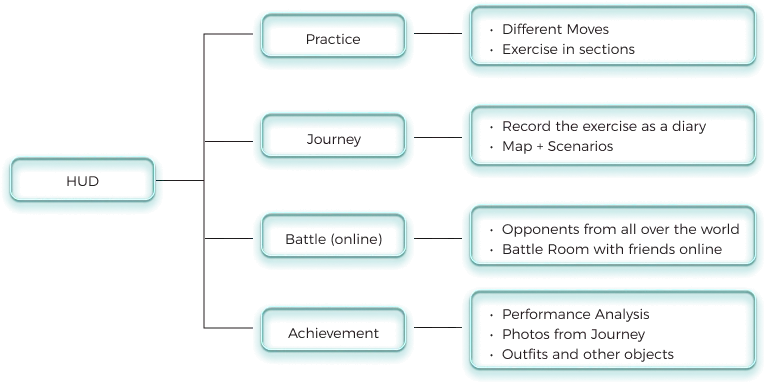
HUD
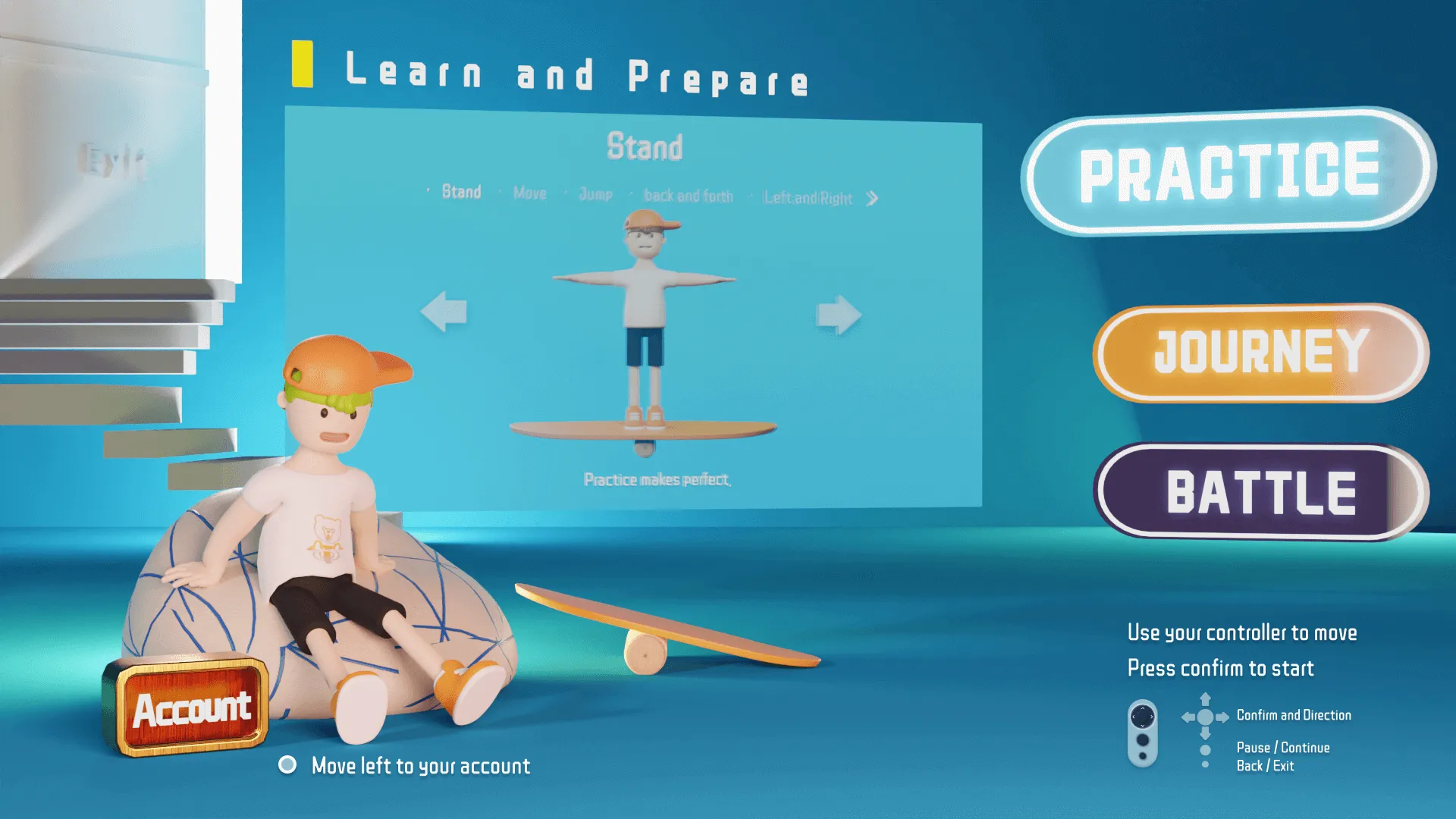
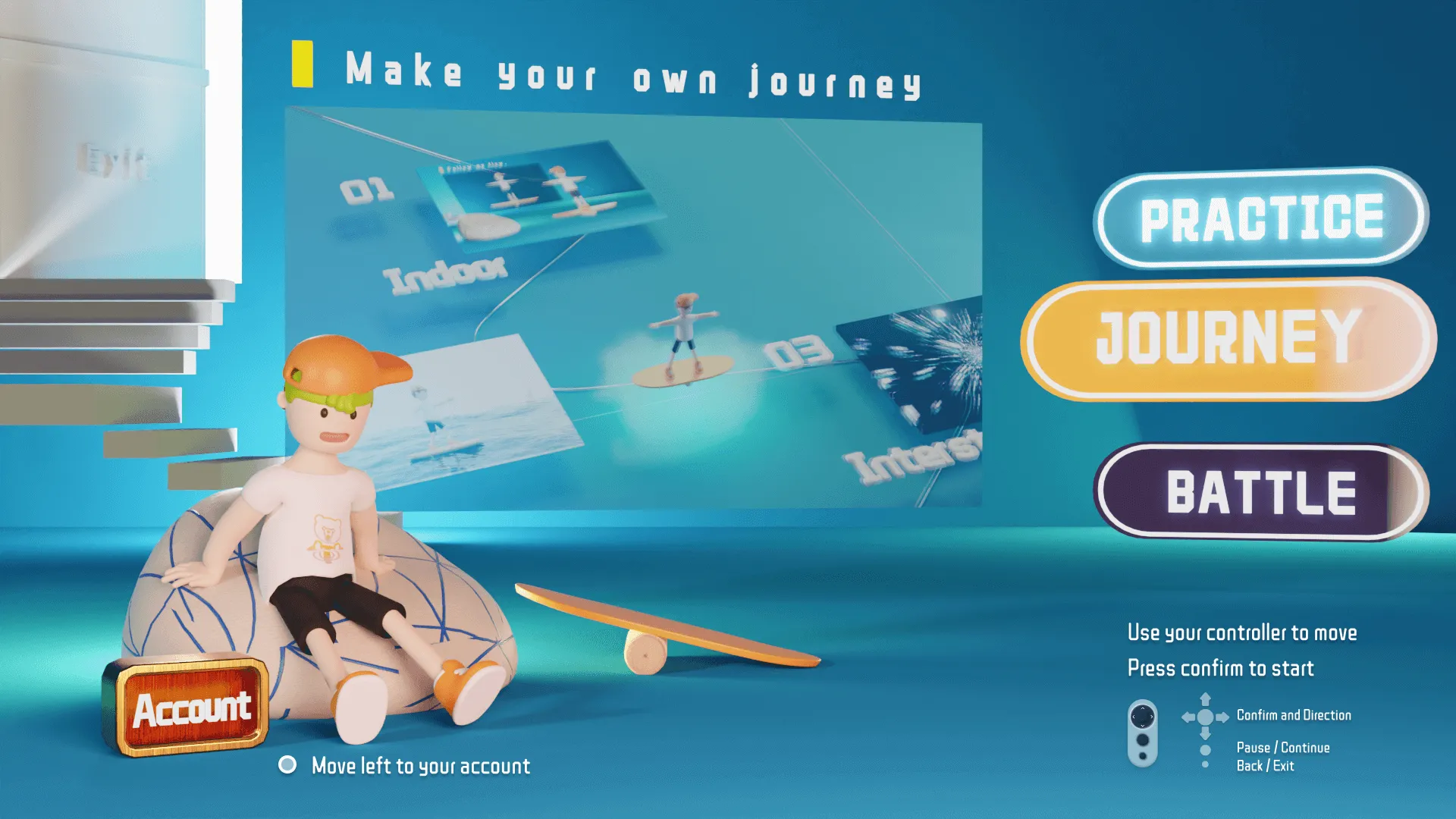
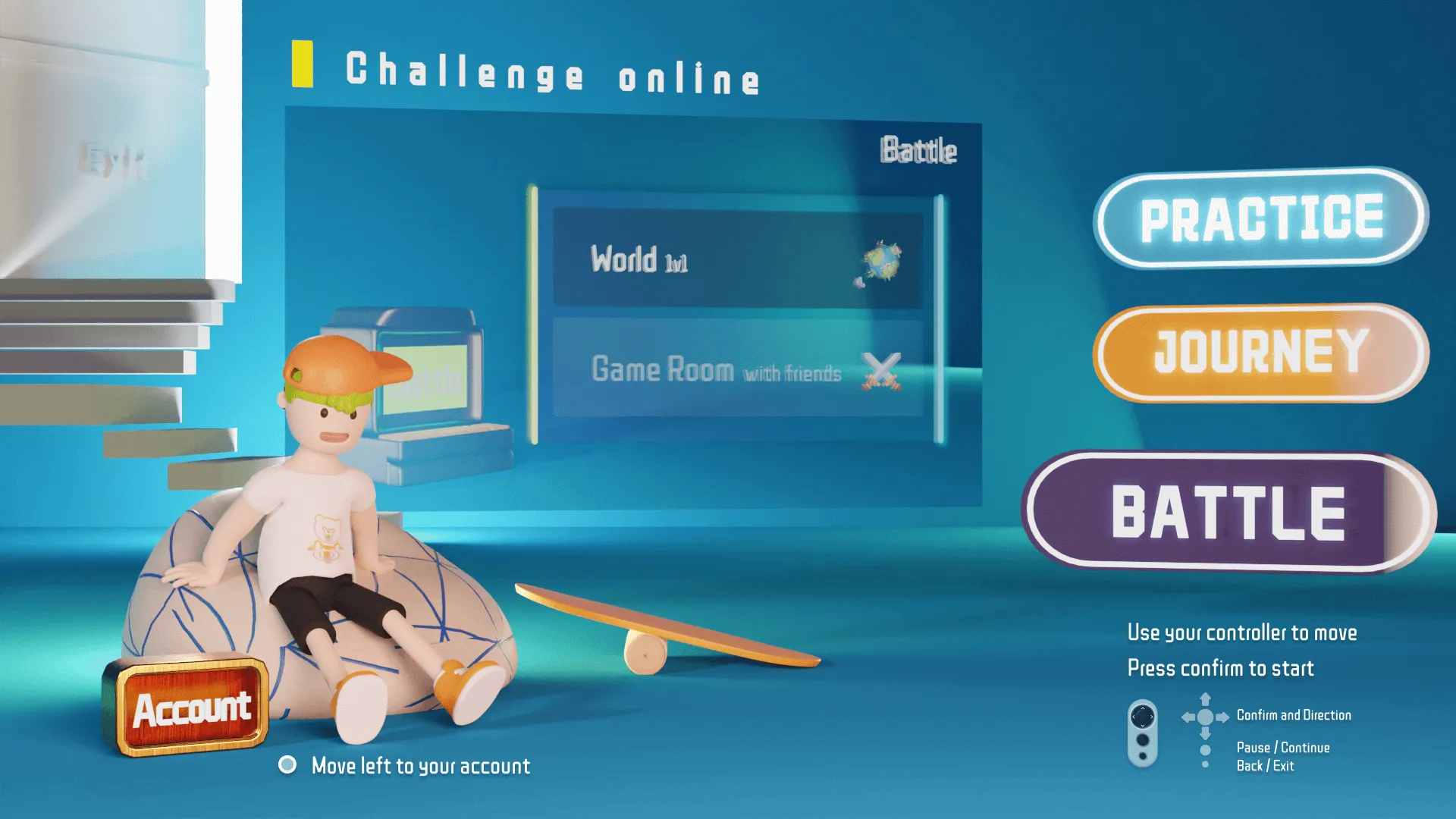
Three gameplay modules and an account section are presented in the scene.
Different prompts and interfaces appear depending on the module selected.
Practice
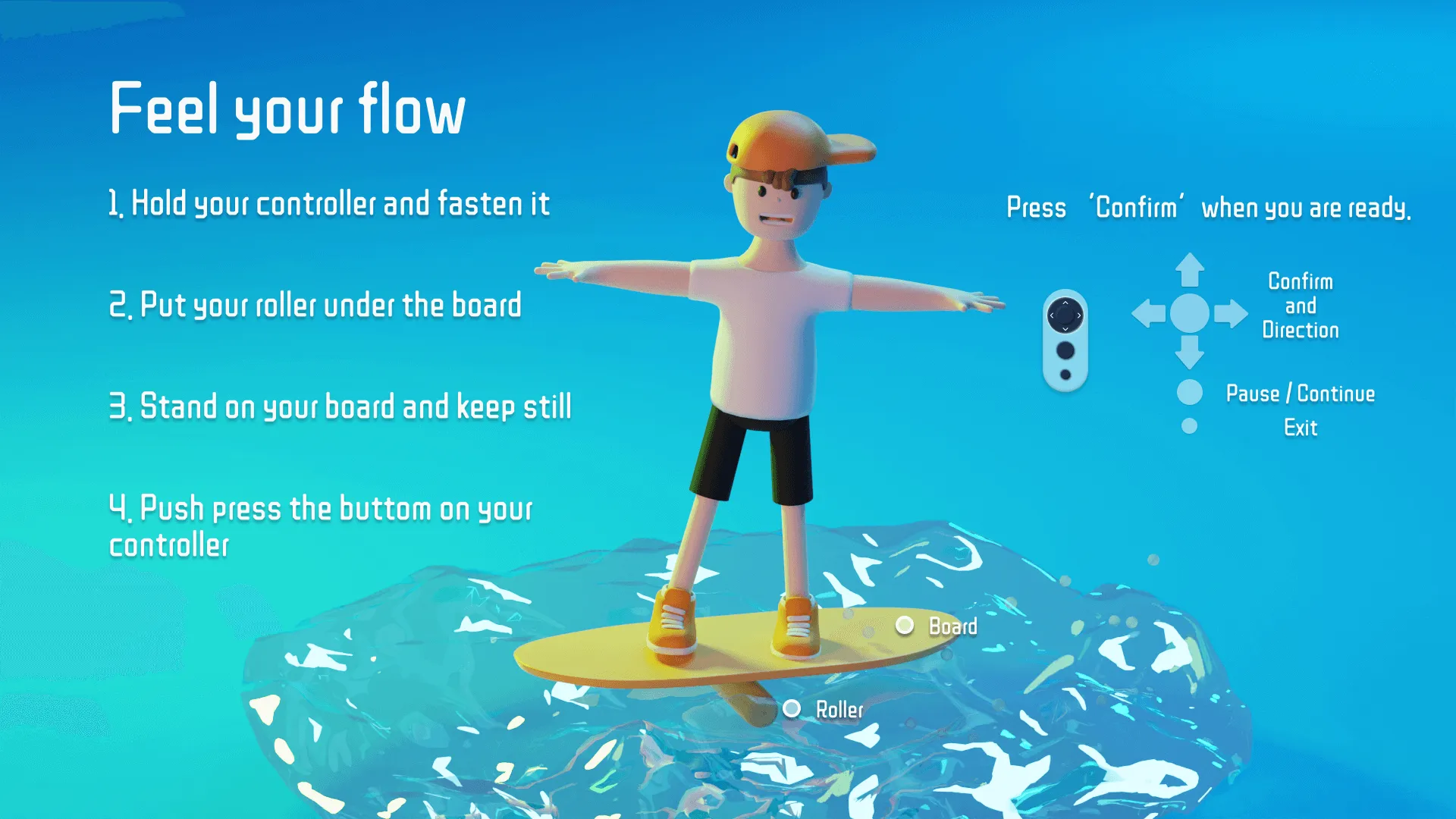
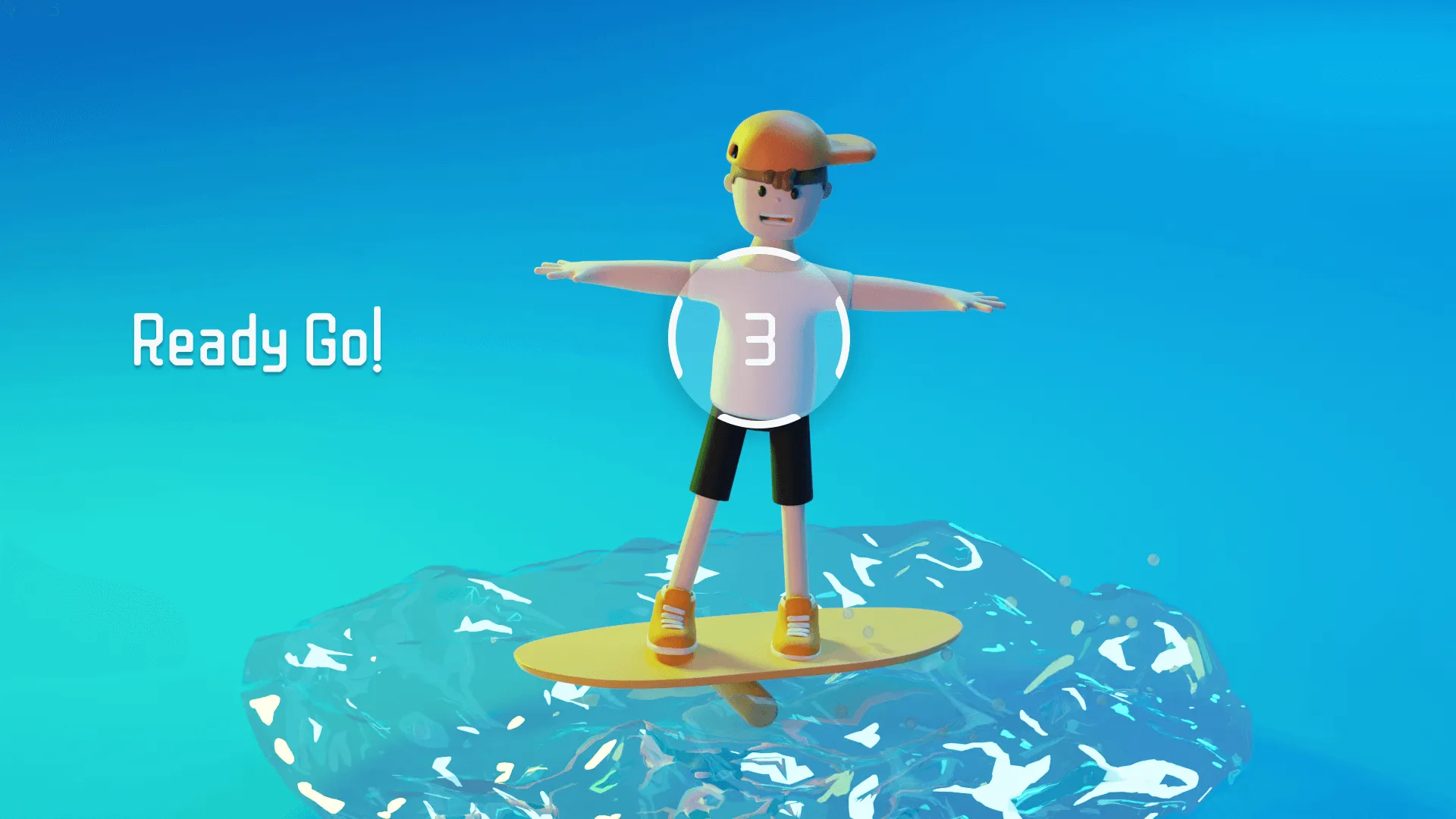
In Practice mode, players can learn both basic and advanced movements before entering Journey or Battle modes.
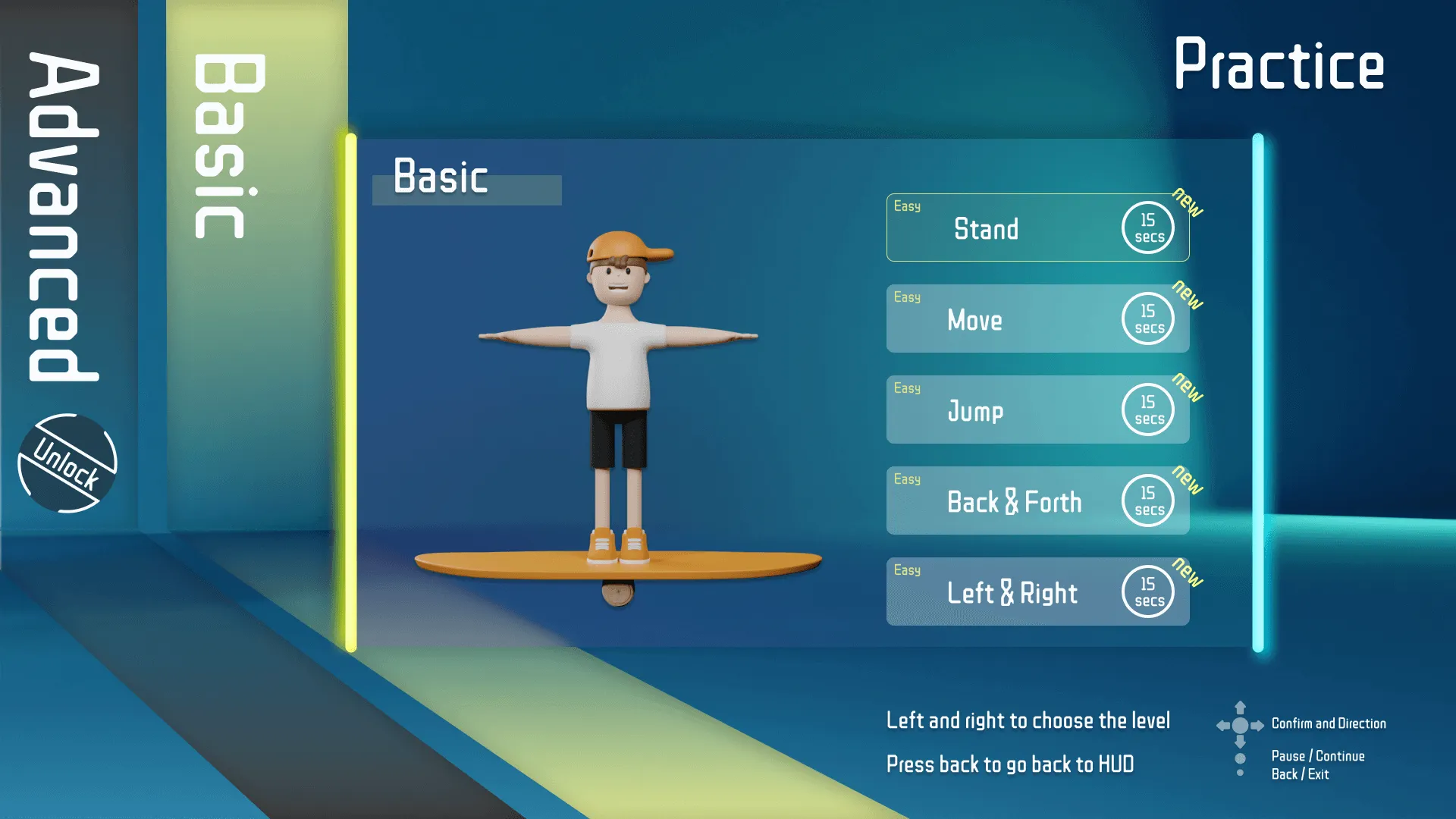

During practice, instructions and balance board position data are displayed on screen.
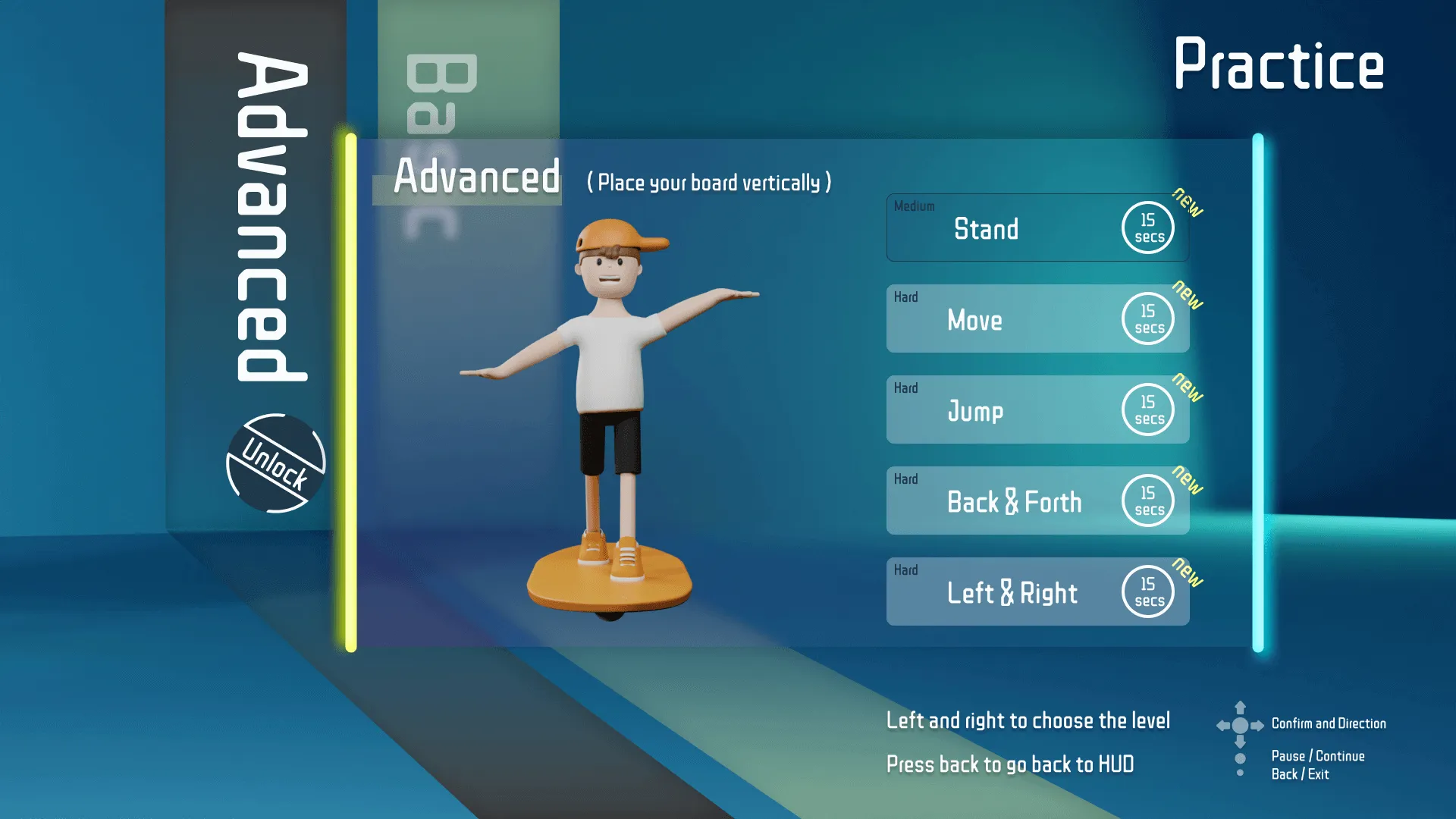
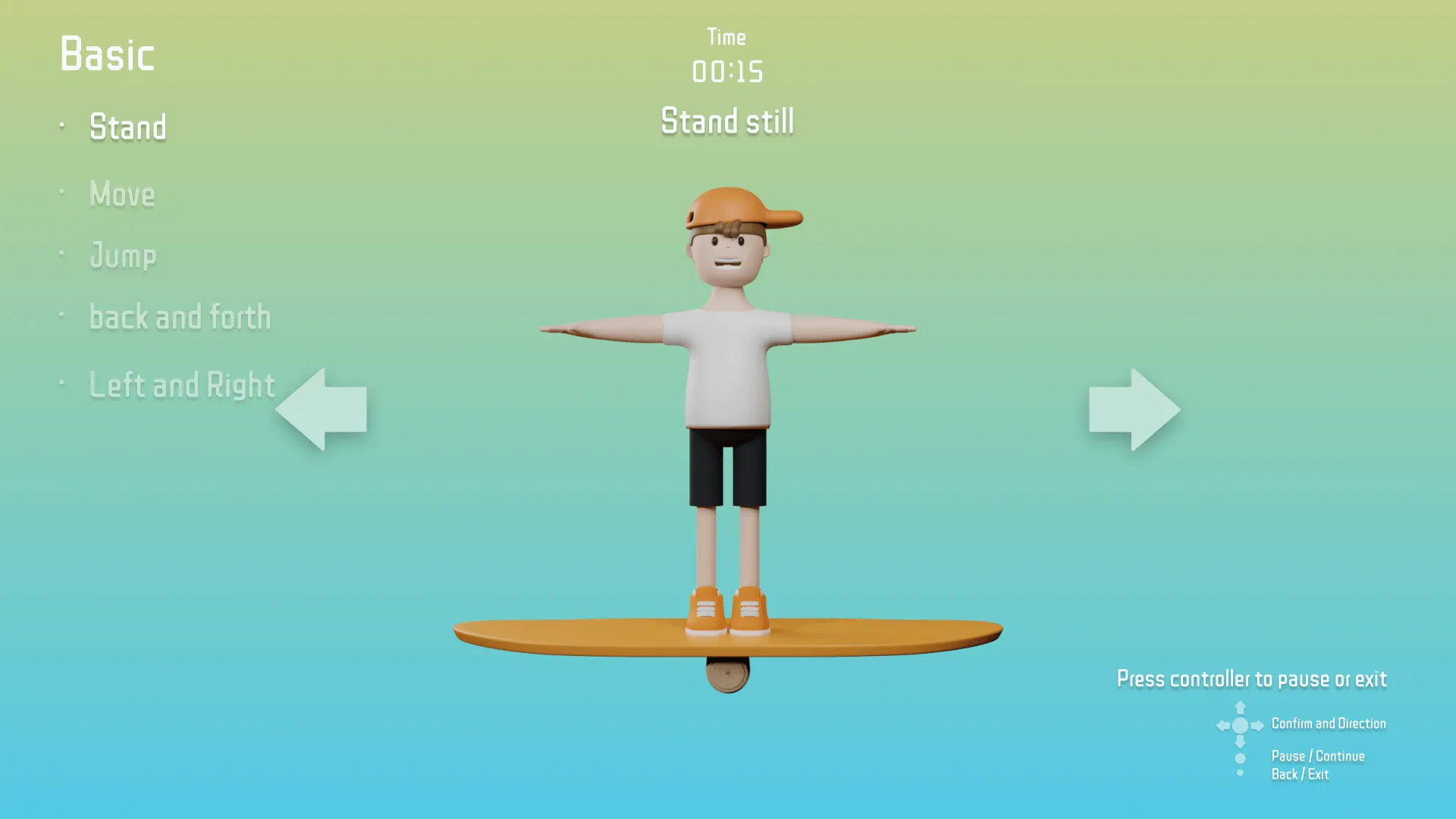
Before entering practice, players see an instructional interface on how to use the controller and balance board.
Journey
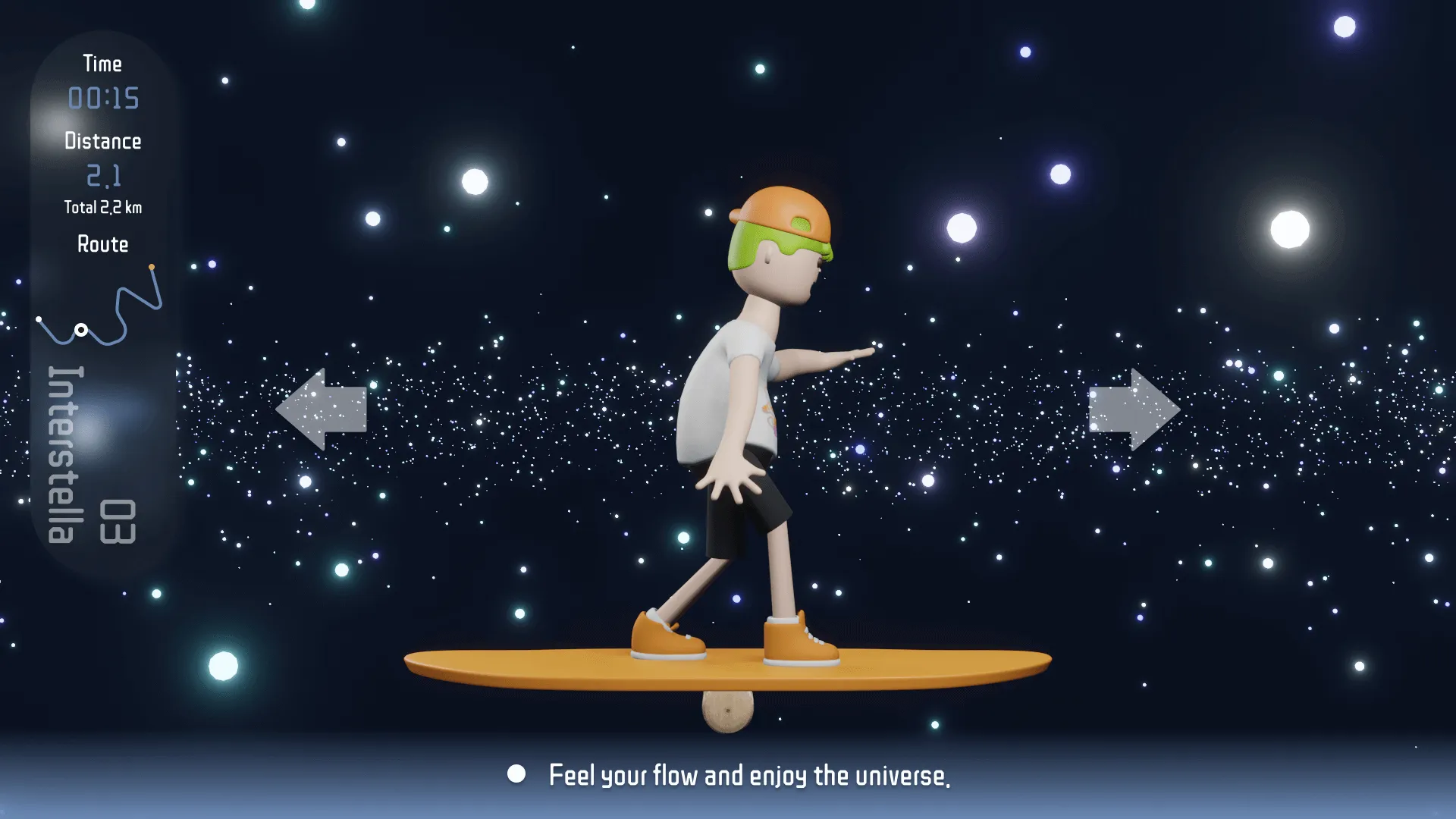
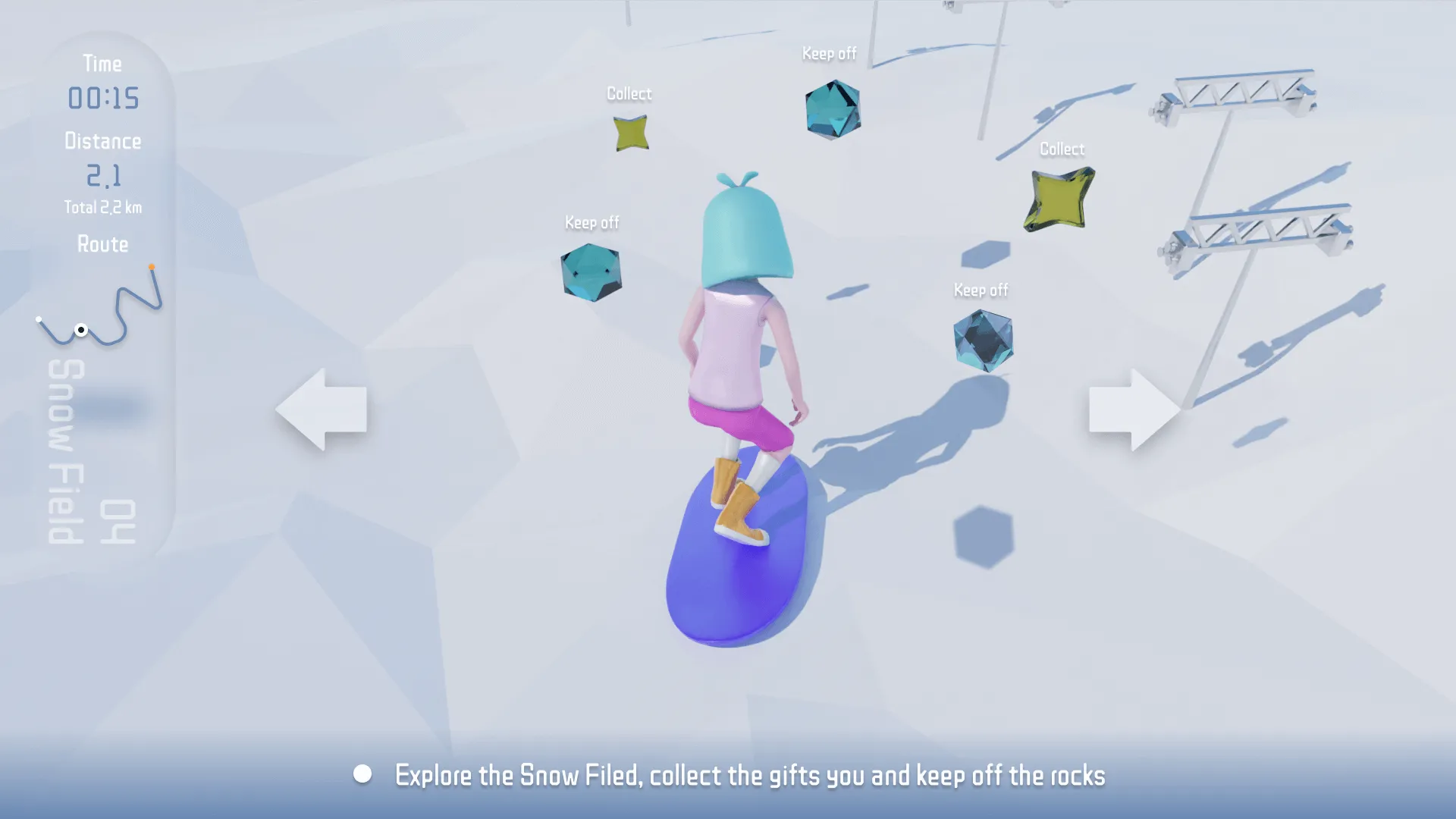
In Journey mode, players travel through different landscapes via a map.
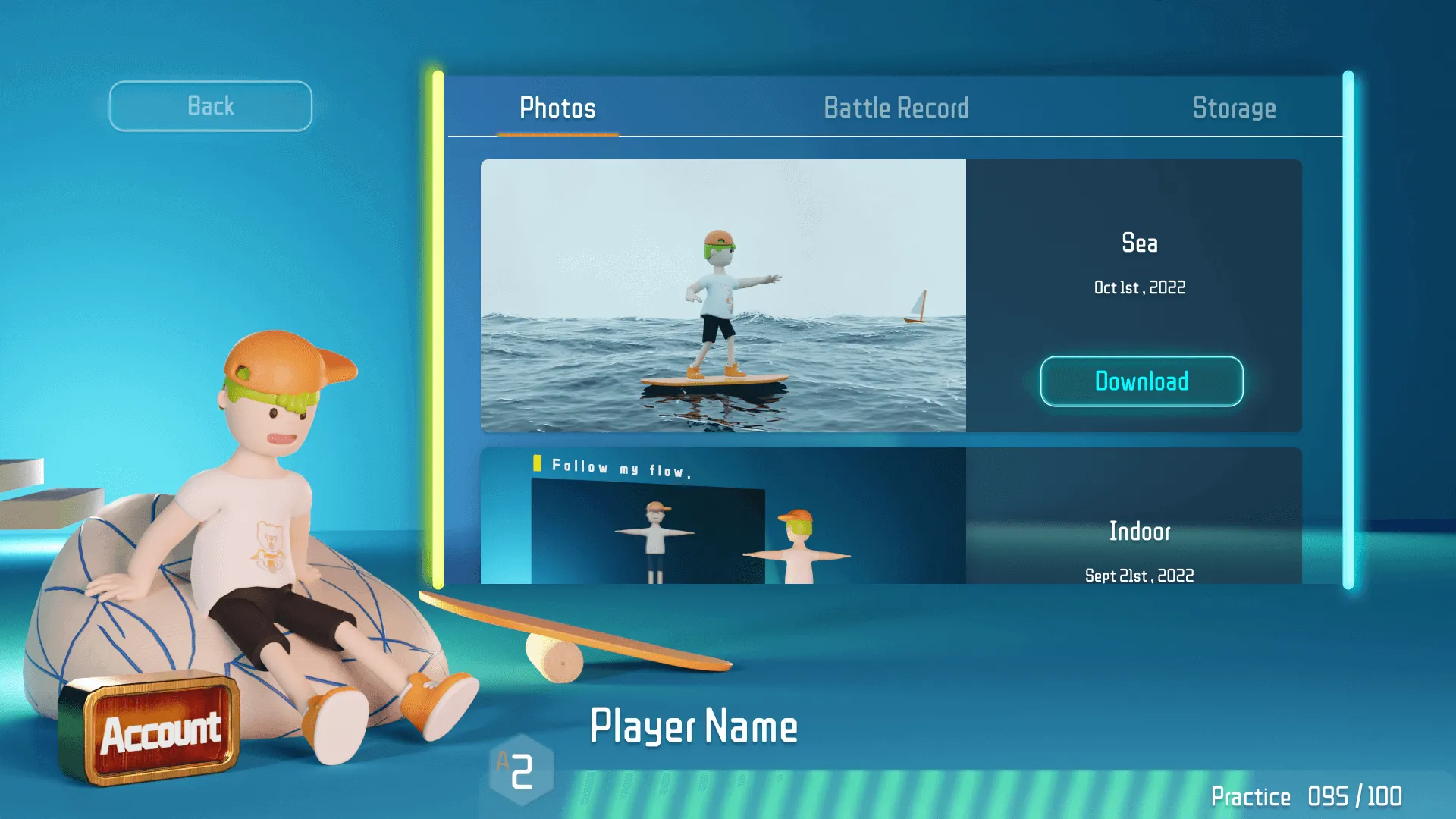
Each completed scene rewards the player with a photo, building a diary-like collection that is also saved to the Account.

Scenes begin with easier levels and increase in difficulty as the player progresses.



Limited Bundle Concept
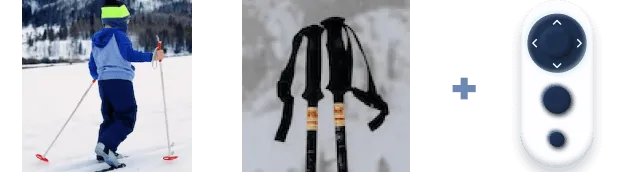
A ski scenario would work naturally with the balance board.
A special edition bundle could include controllers attached to ski poles for a more immersive experience.
VR Device
VR can also replace consoles and screens, allowing players to experience outdoor-inspired scenes inside the headset.
Battle
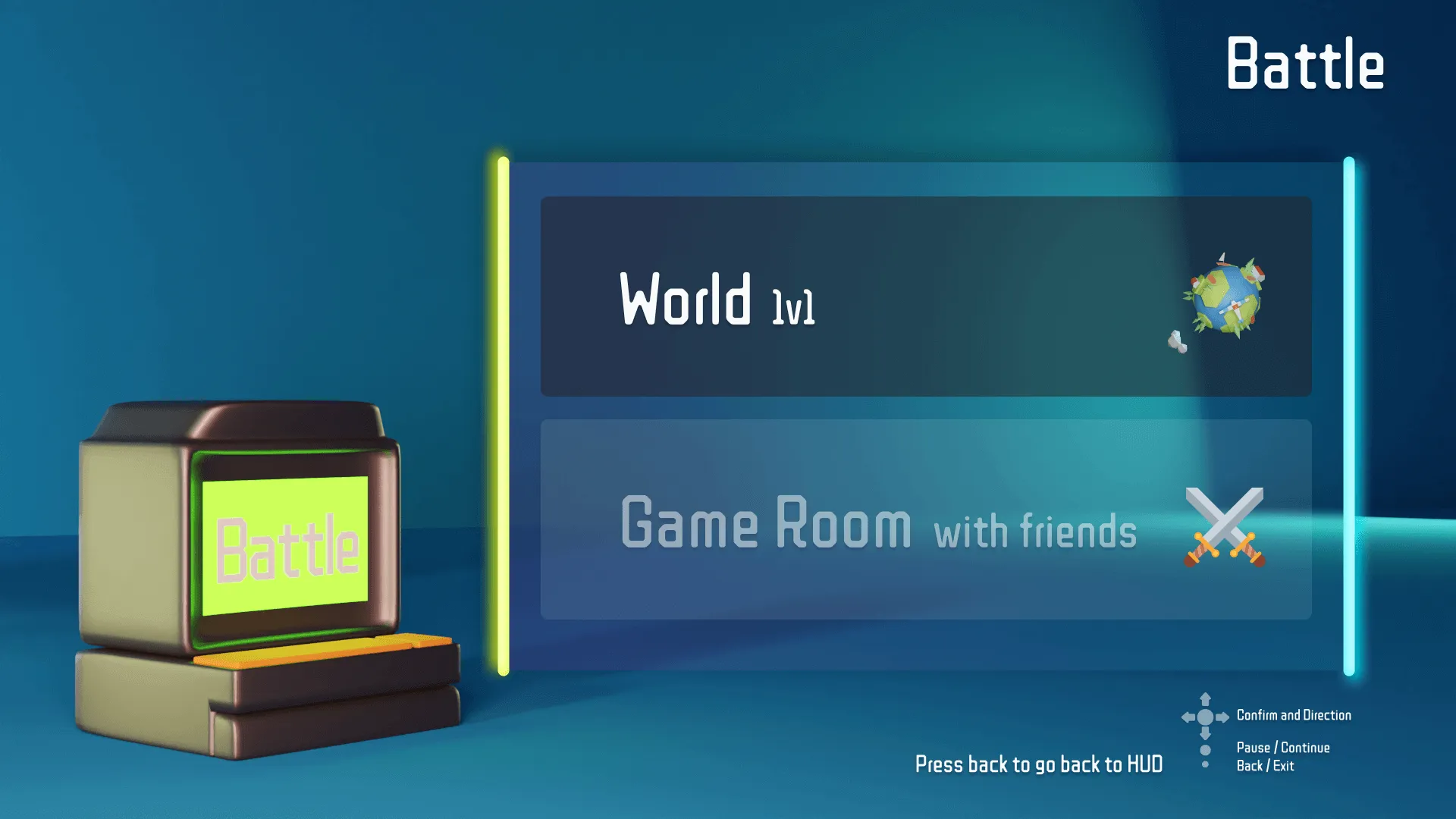
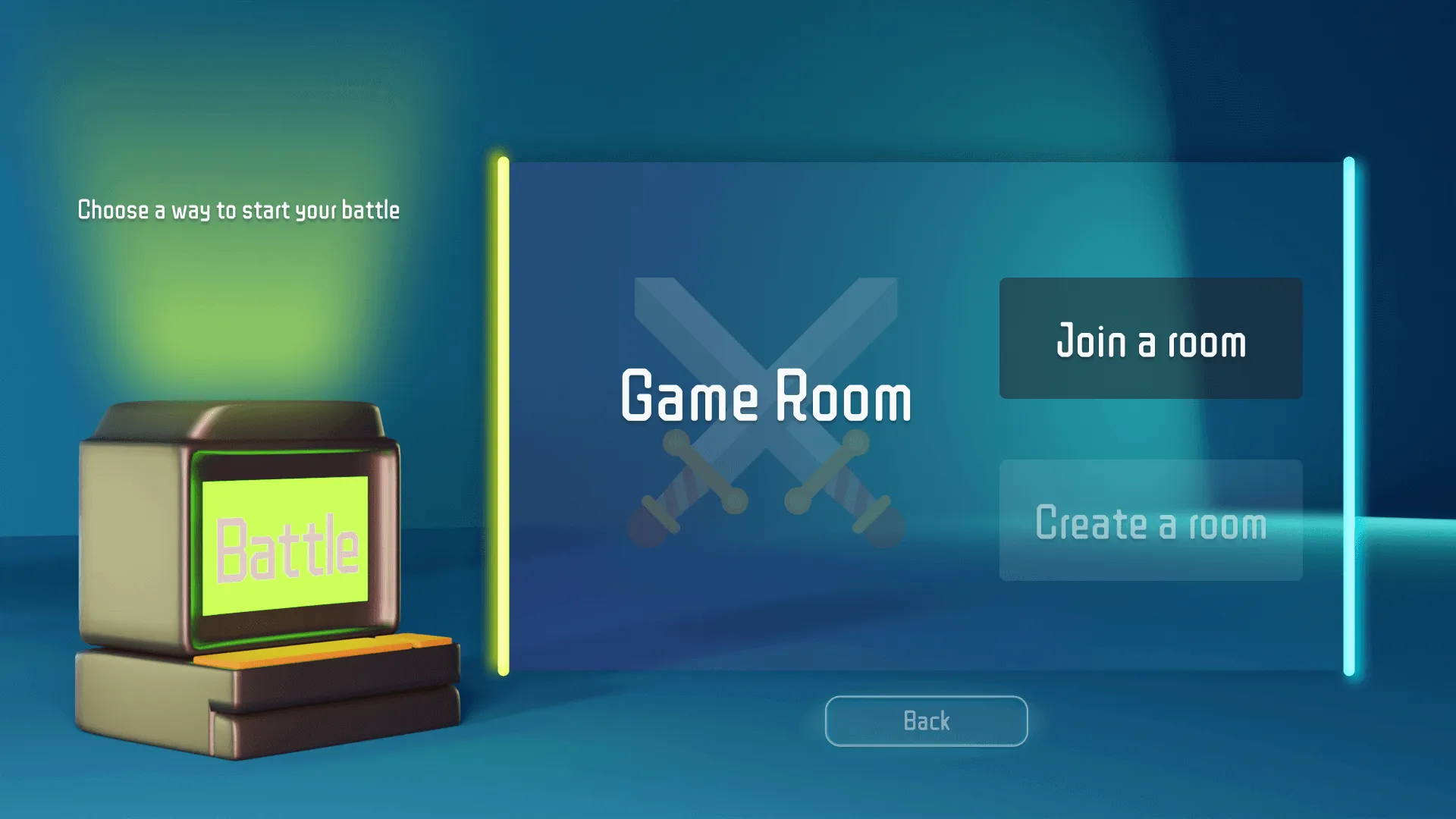
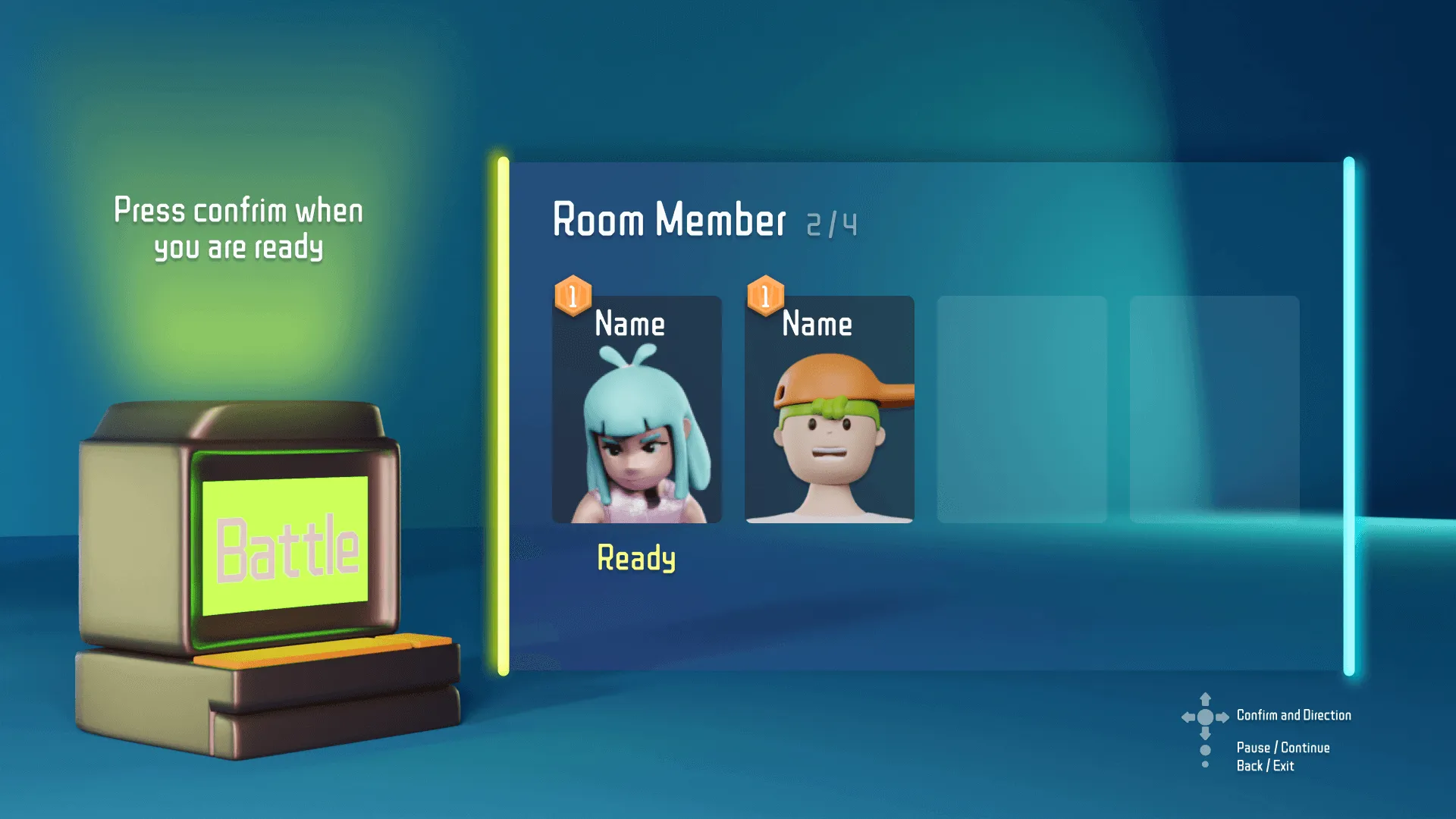
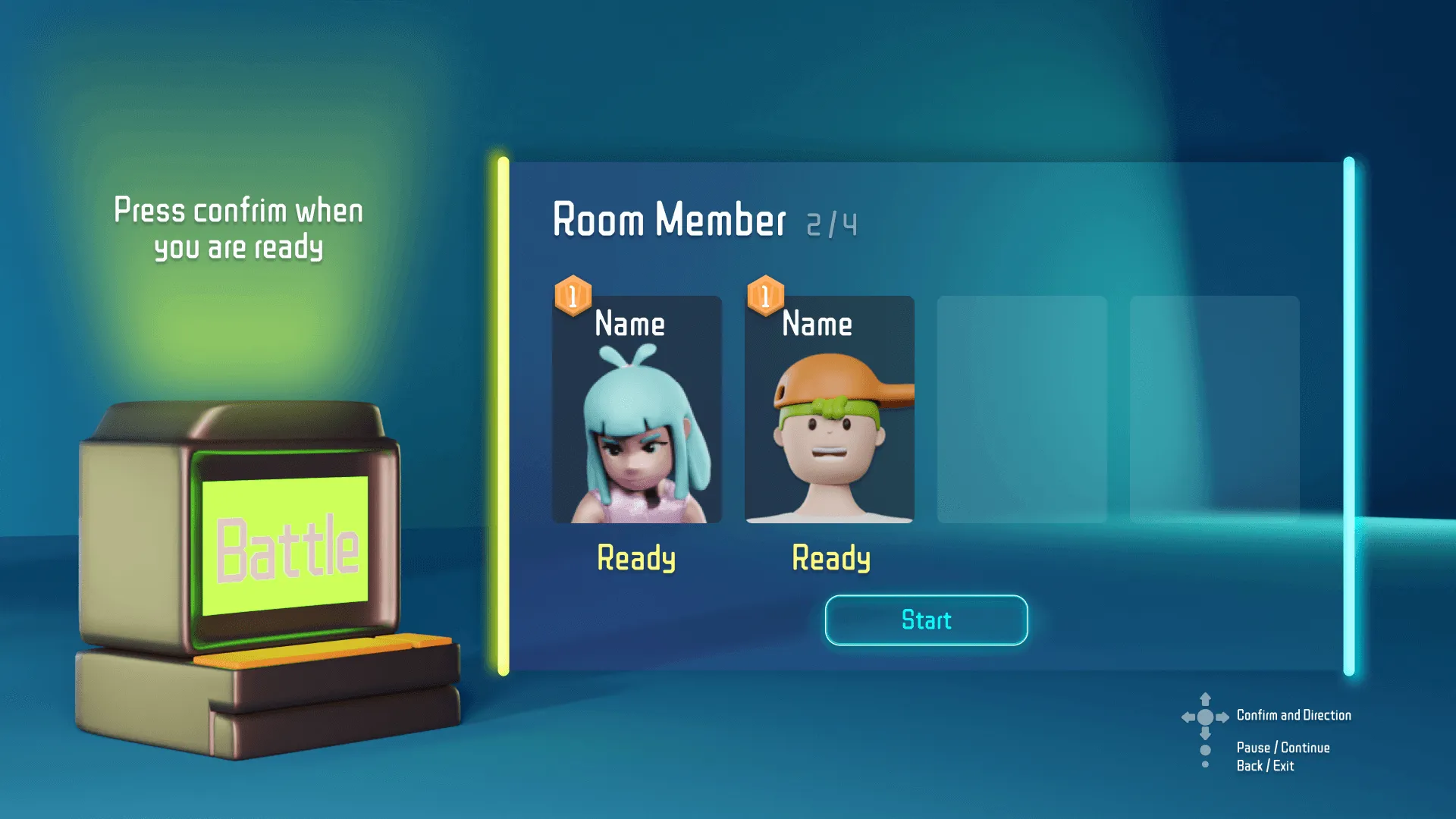
Battle mode includes two formats: World and Game Room.
World 1V1
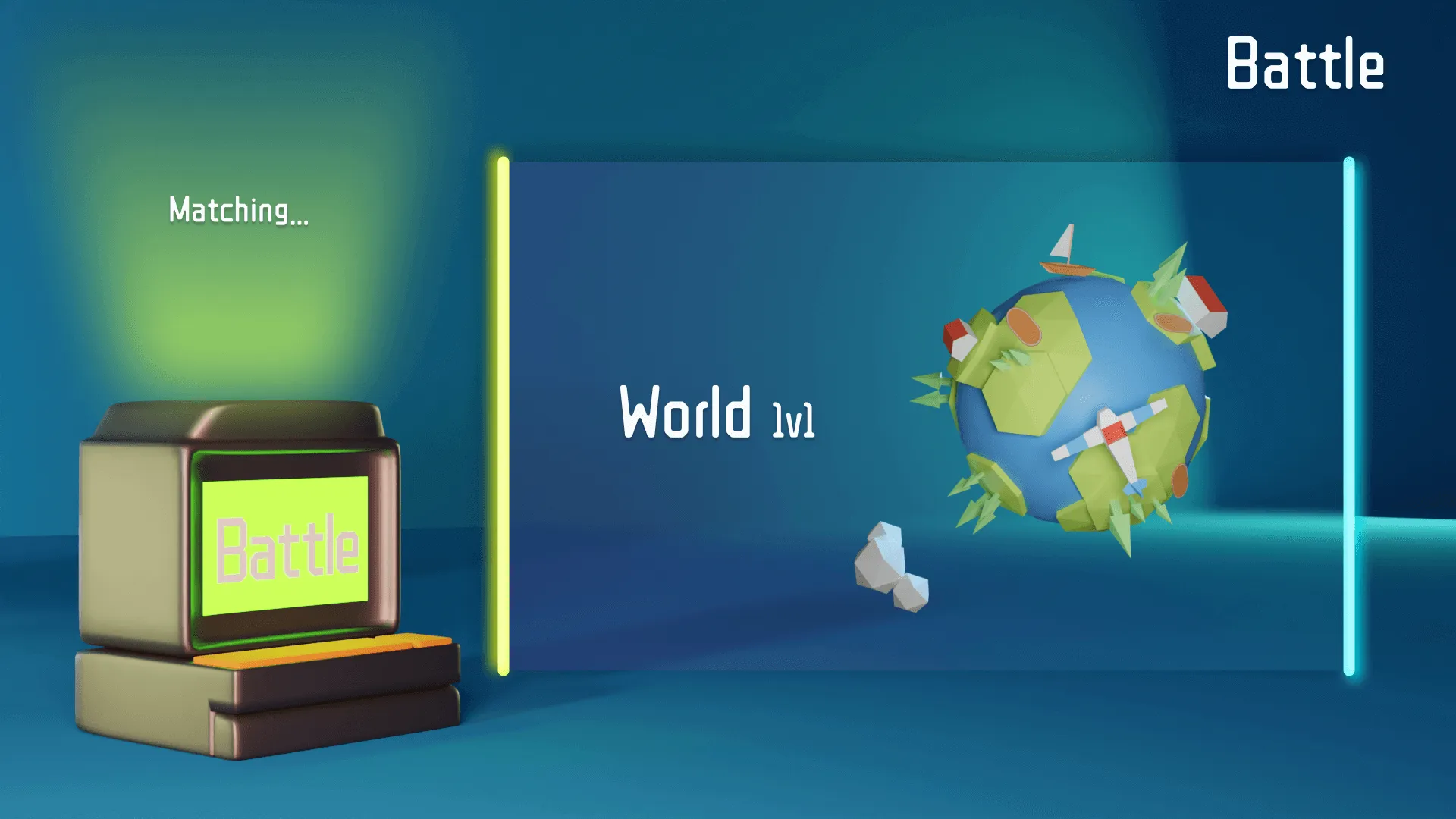
Players are matched online and race to the destination.
Speed is determined by the data coming from the balance board and roller.

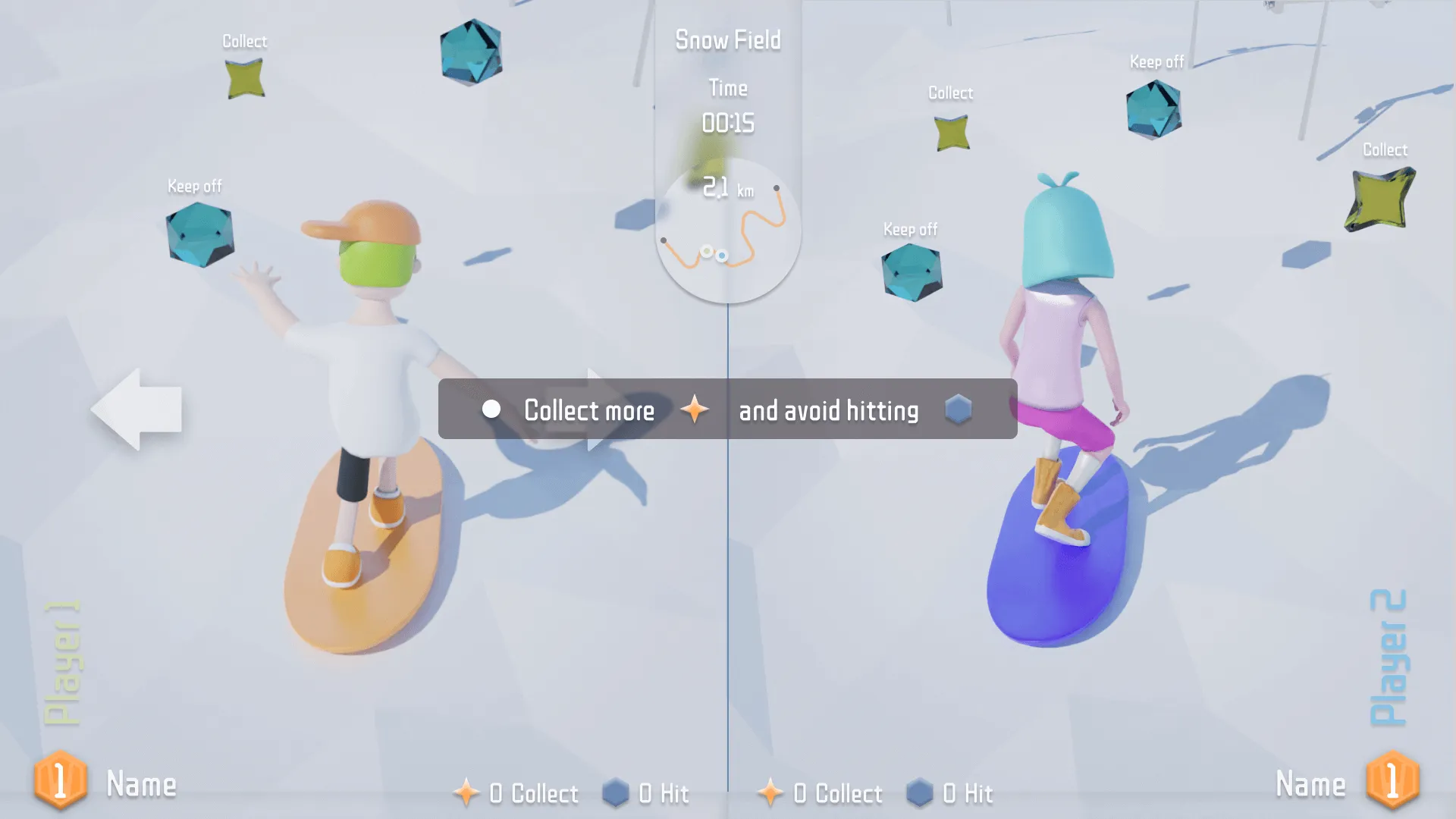
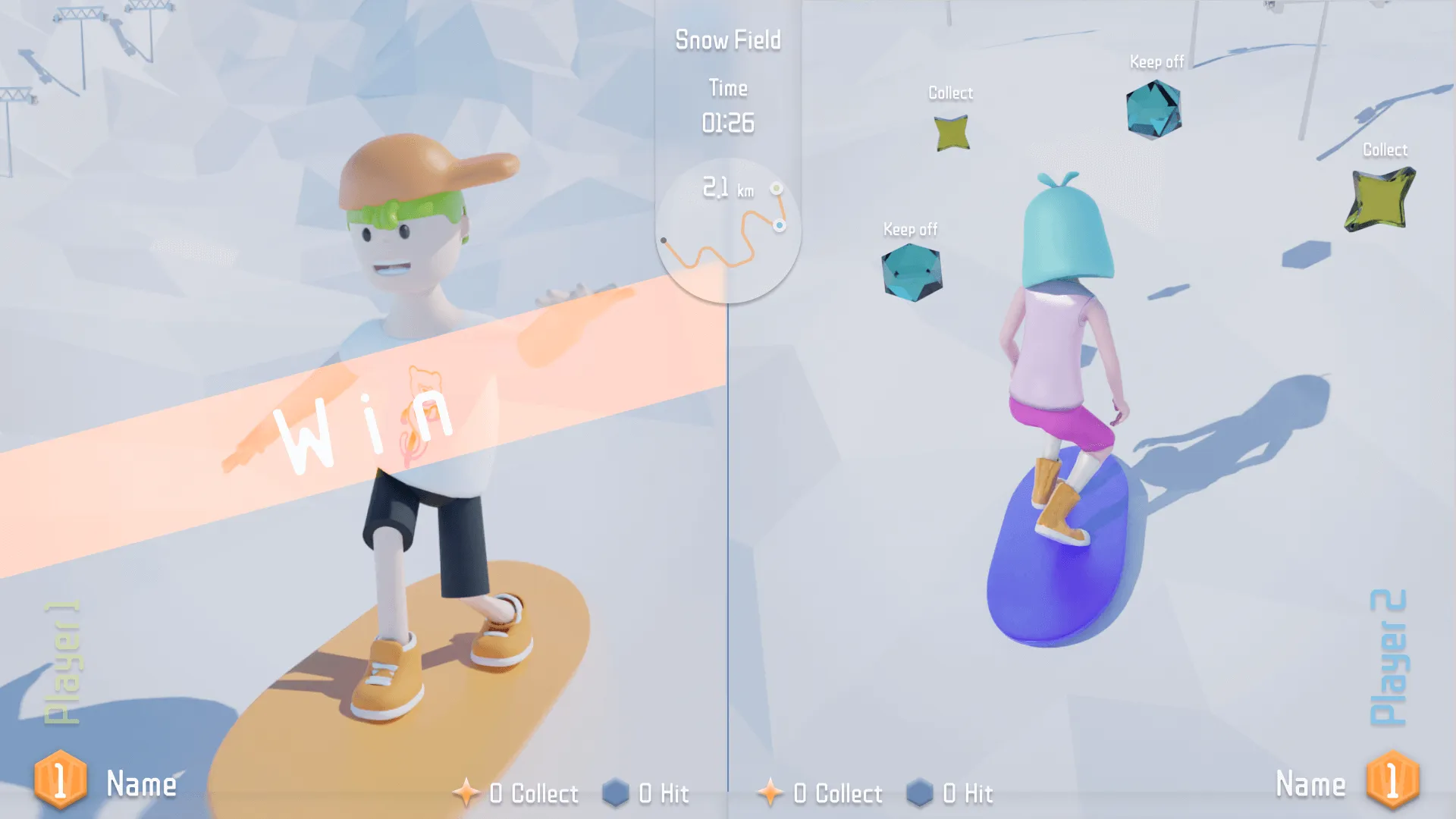
Players gain speed boosts by collecting objects and are slowed down when hitting obstacles.
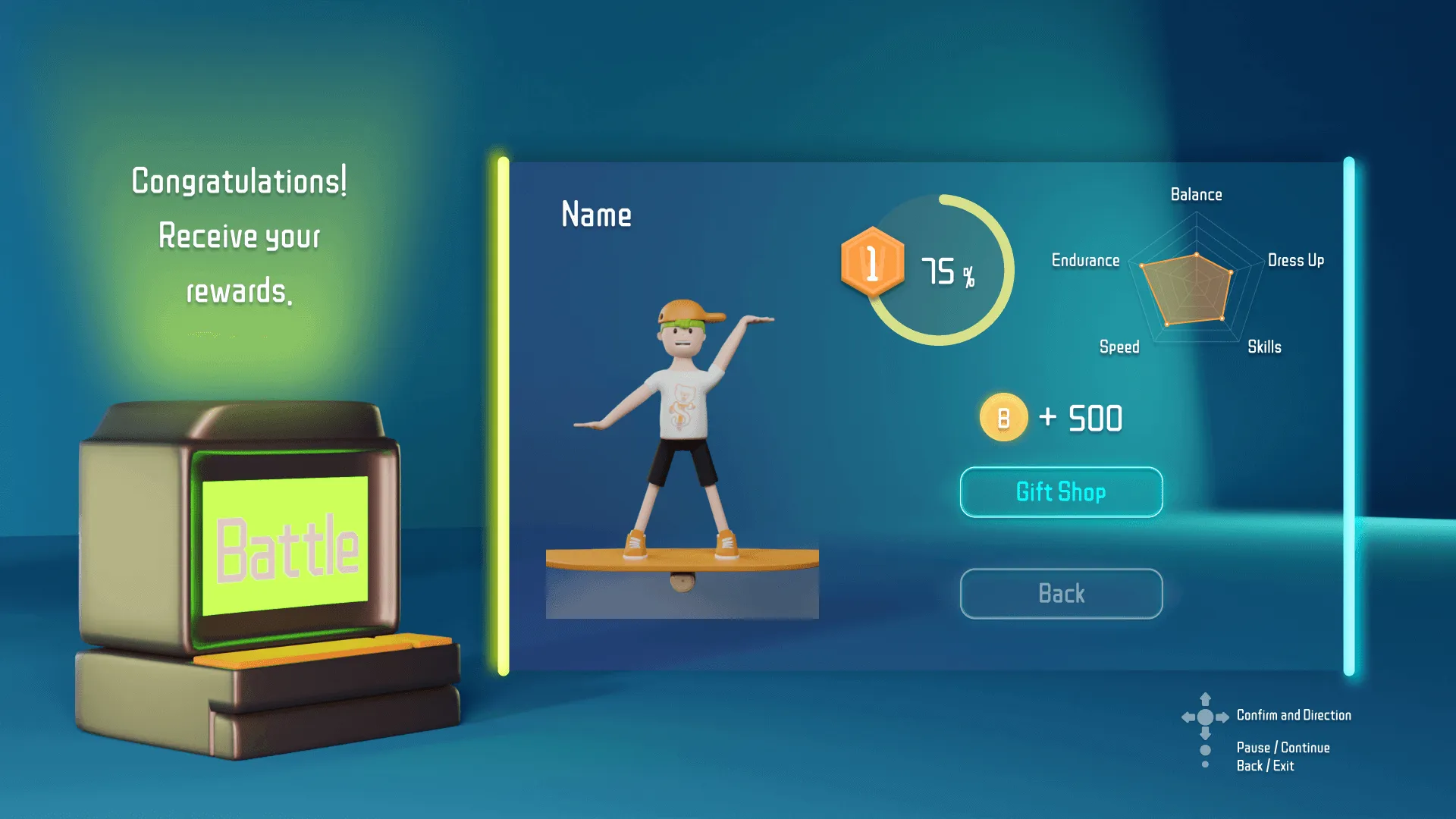
After each match, they receive:
- analysis of balance, endurance, size, skill, and speed
- experience points
- credits for redeeming clothing or equipment
Game Room
Players can create or join private rooms with up to four players.


Account
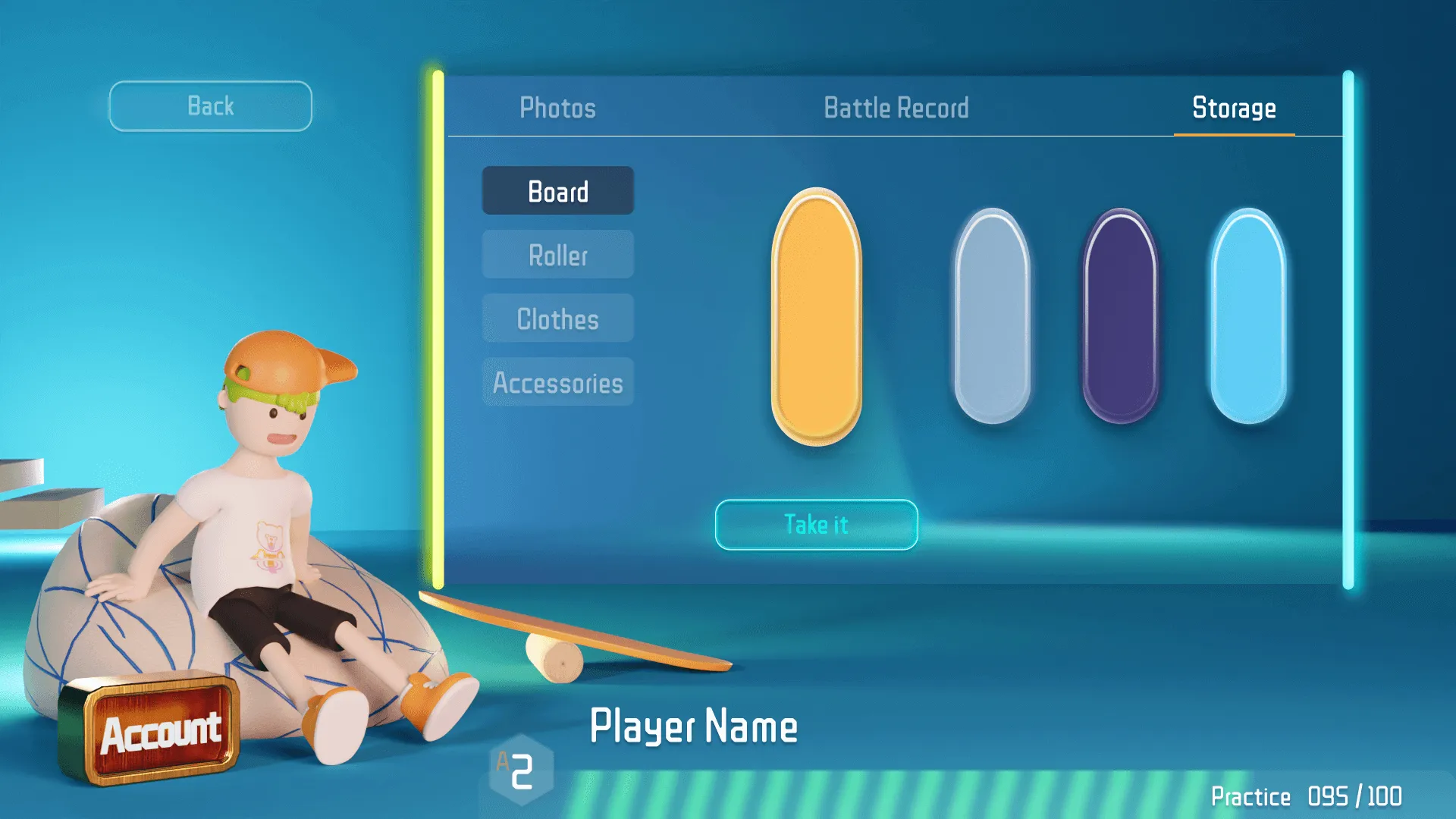
The account area contains three modules:
- Photo
- Battle Record
- Storage
Players can save Journey photos, review battle statistics, and customise their characters.

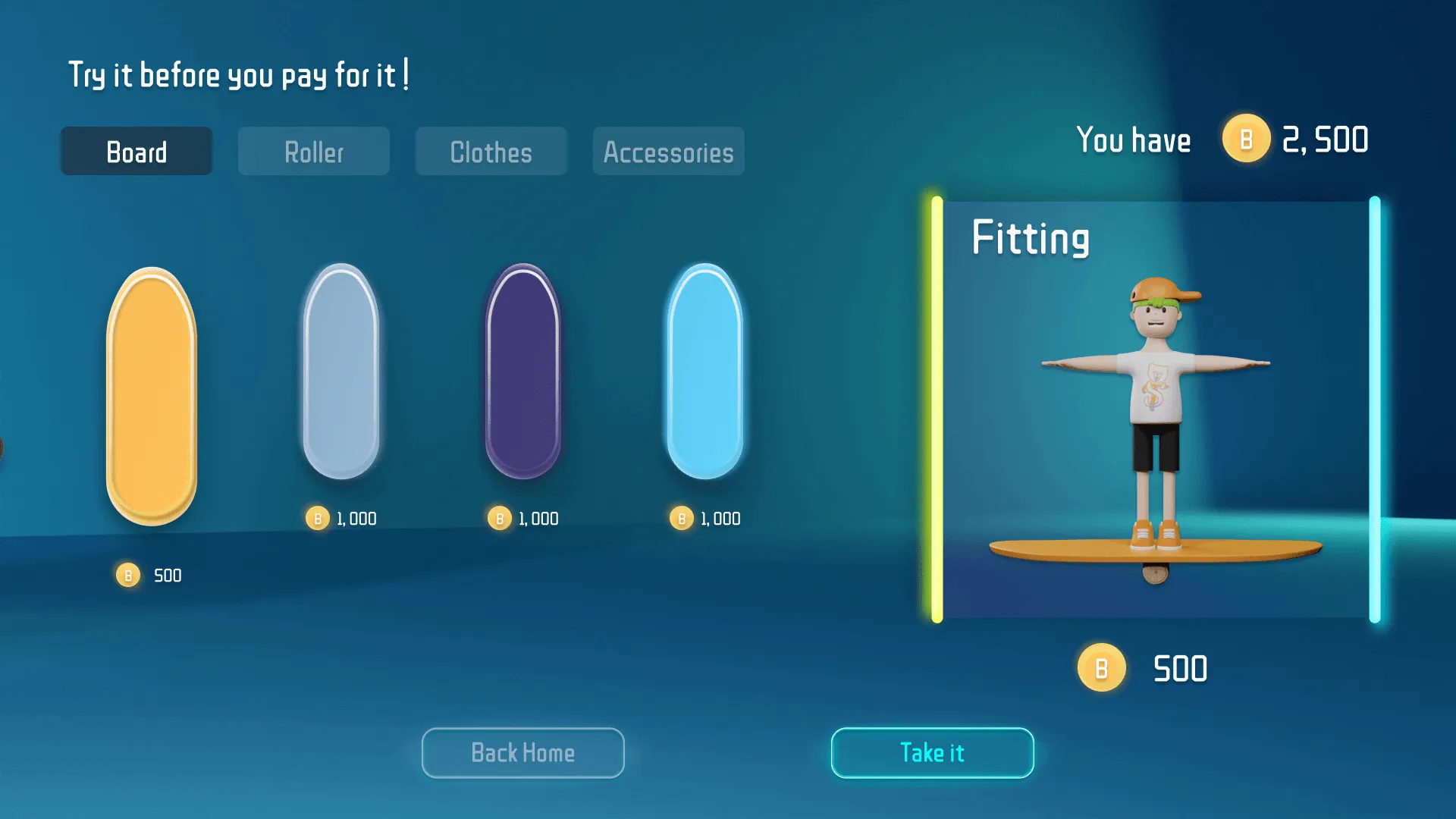
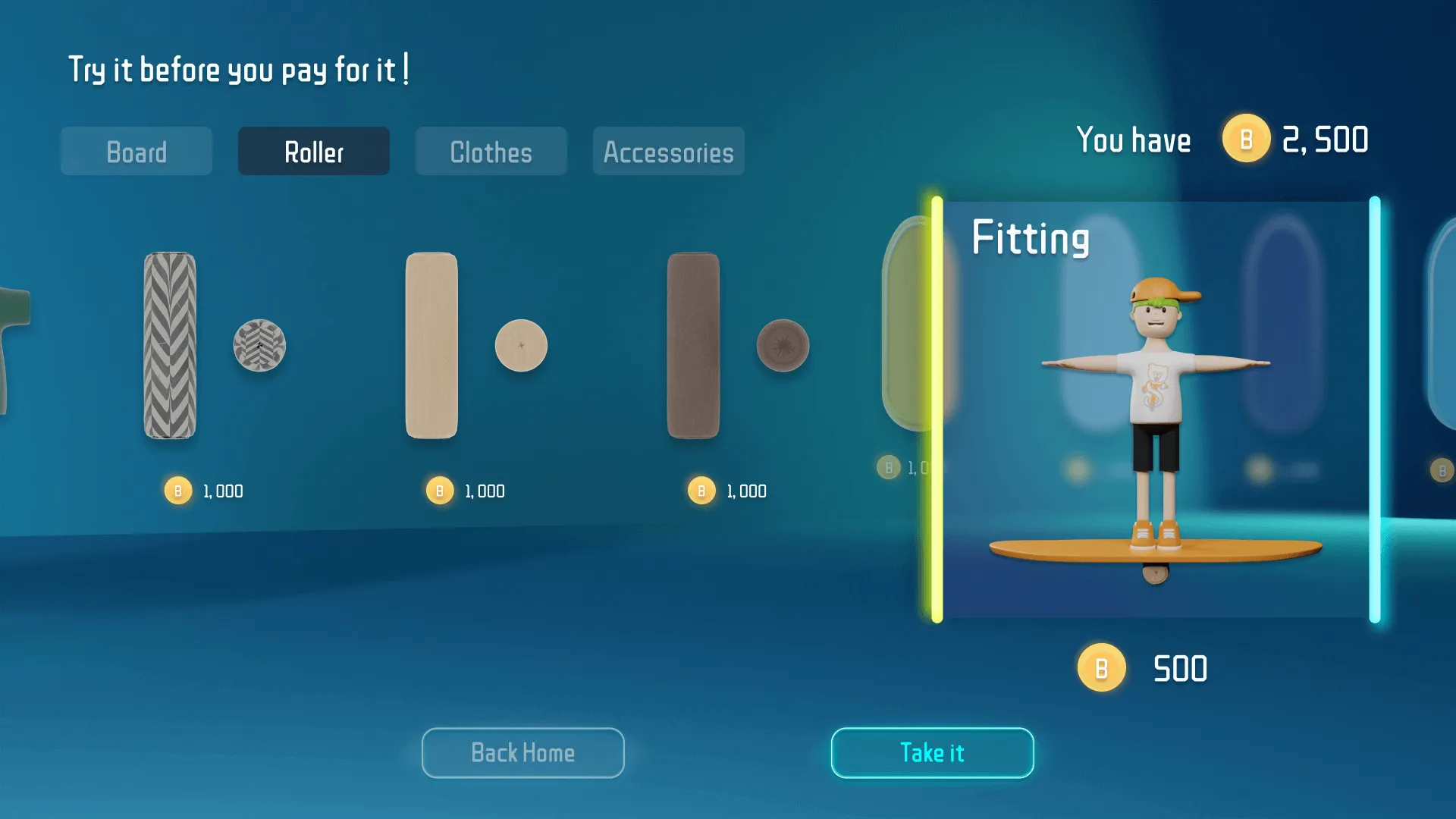
Gift Shop
Players can redeem various clothes, boards, and rollers.

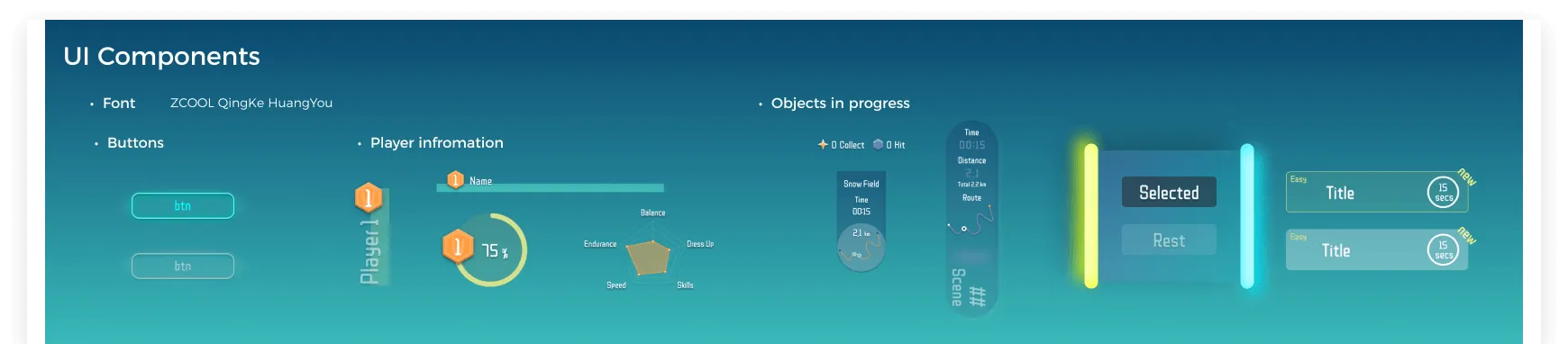
UI Components
Work Progress
Modeling with Blender
HUD scenes
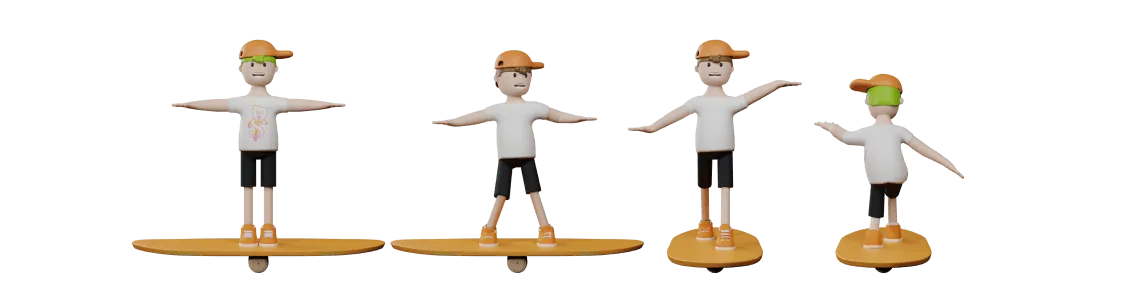
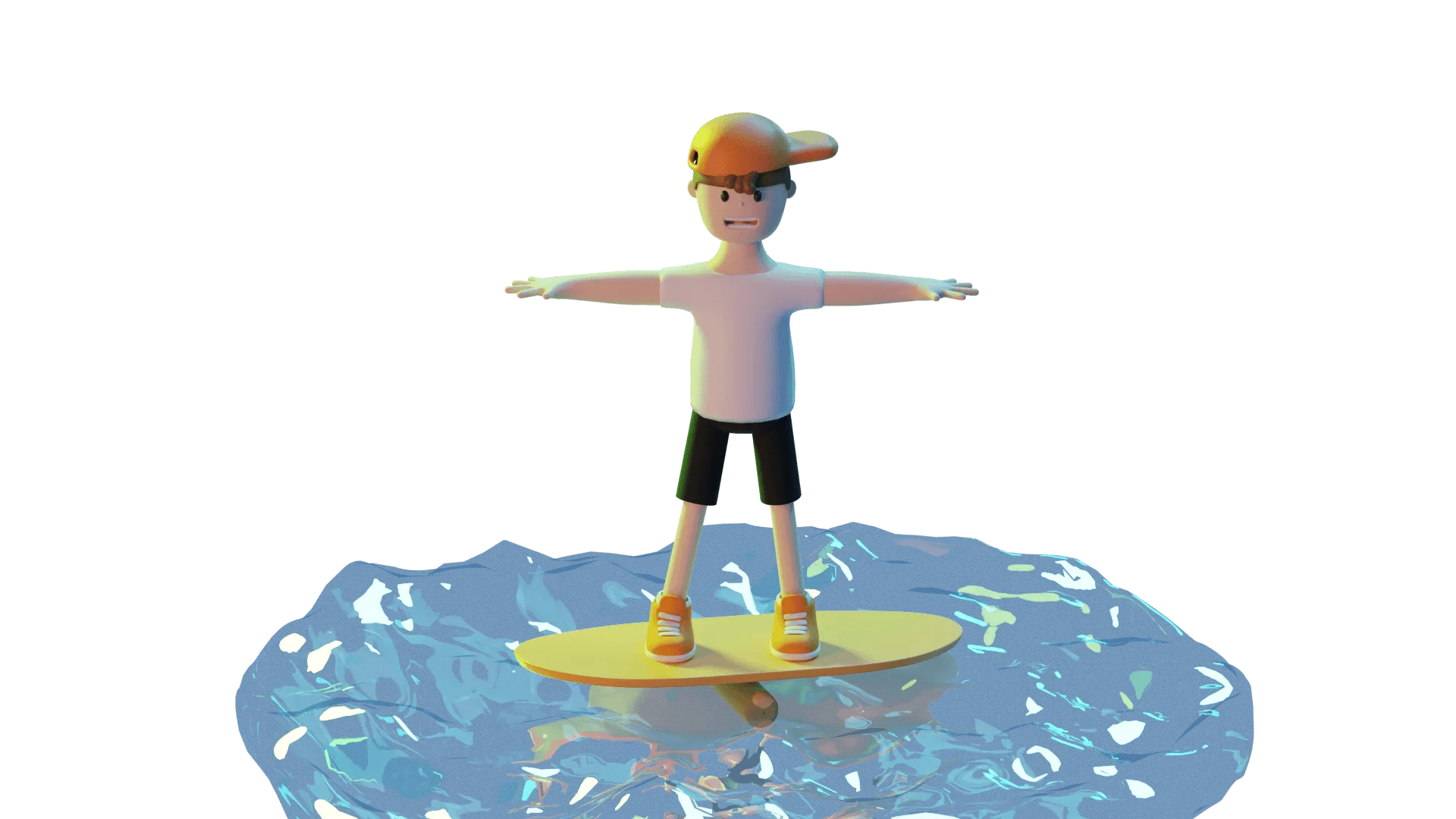
Game room, map, and characters on a board were modelled and visualised in Blender.

Scenarios
Sea, universe, and snow mountain environments were developed as distinct playable scenes.


Characters
Character parts were rigged in Blender, while others were uploaded to Mixamo for rigging and animation.