Please switch to light mode for a better experience.
Introduction
This project extends a system I previously designed for autonomous driving monitoring platforms.
In my previous role, I worked on a monitoring platform for autonomous vehicles. To improve the overall service experience, I continued exploring how autonomous ride services could be integrated directly into a mobile ride-hailing application.

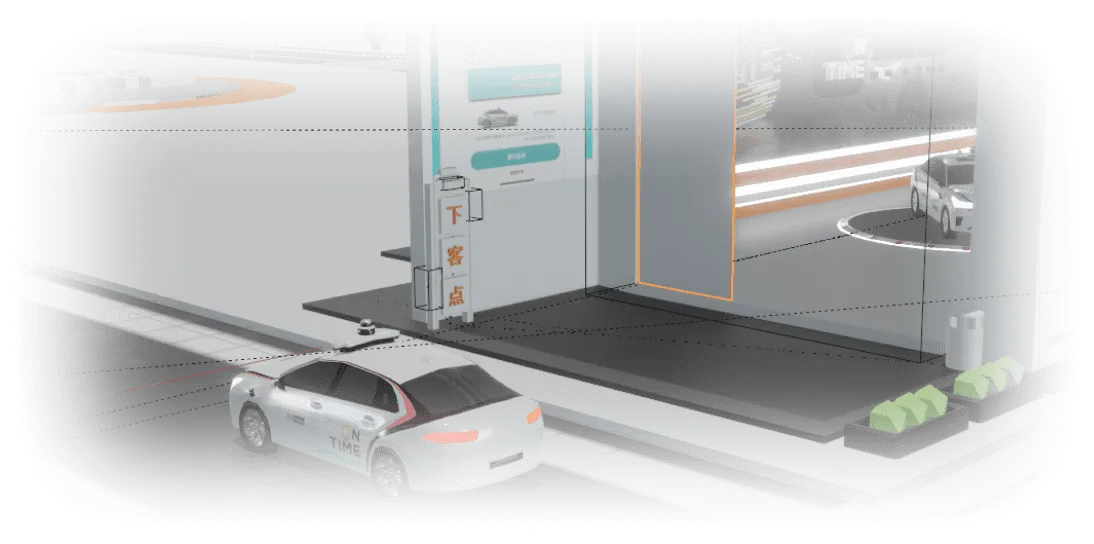
This concept focuses on the passenger experience when finding and riding autonomous vehicles.
Background & Research
Autonomous driving technology is gradually reaching commercial readiness.
Key trends include:
- Ride-hailing platforms beginning to provide autonomous vehicle services
- Passenger demand for ride-hailing expected to grow faster than many other services
- Autonomous transportation becoming a new public mobility experience
(More research insights available upon request.)
Design Preparation
Key factors

From users in China:

Focus of the design
From service providers:
- Build real-time autonomous ride services inside existing ride-hailing apps
- Support multiple autonomous technology partners
- Integrate hardware and software systems inside vehicles
From users:
- Suggested route combinations when needed
- Motivation and trust-building for autonomous services
- Seamless experience across the entire journey
- Clear vehicle and system information in the mobile app
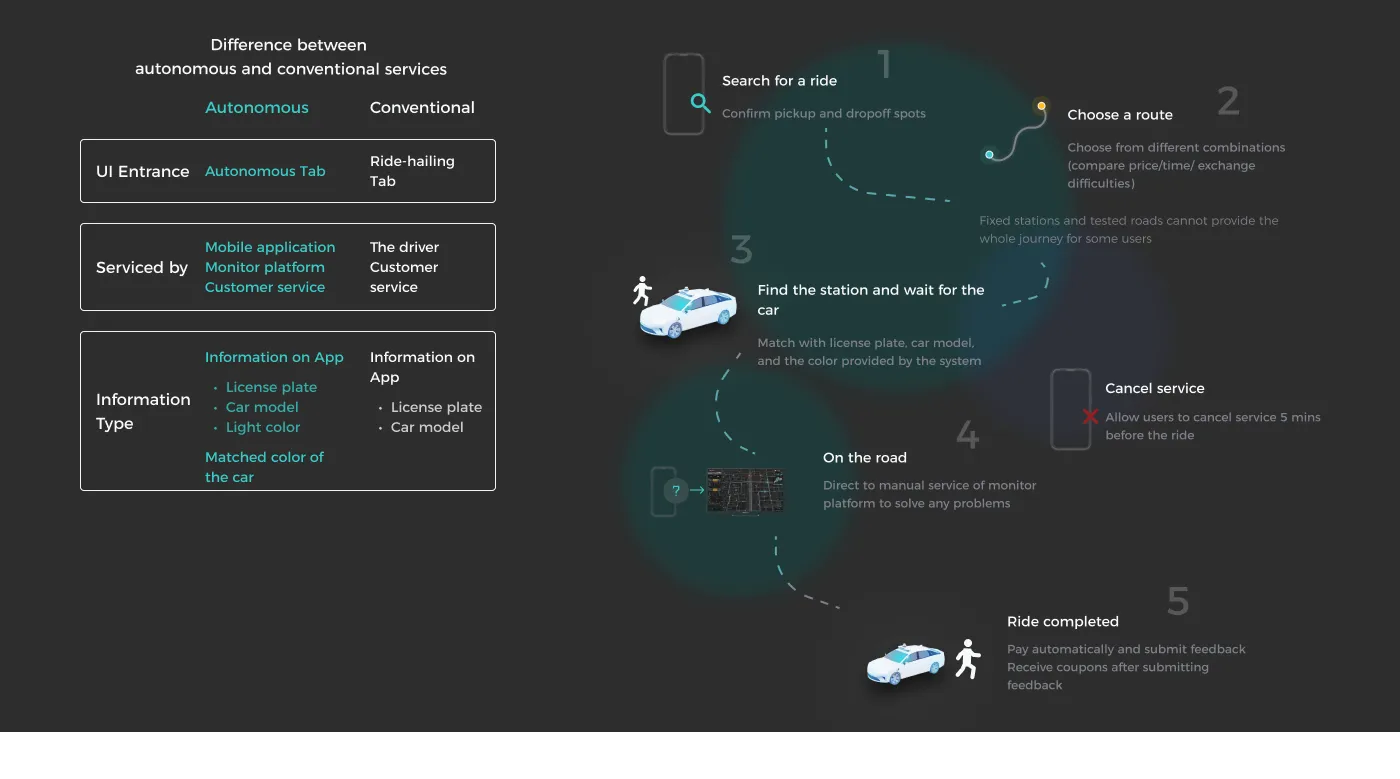
User Journey
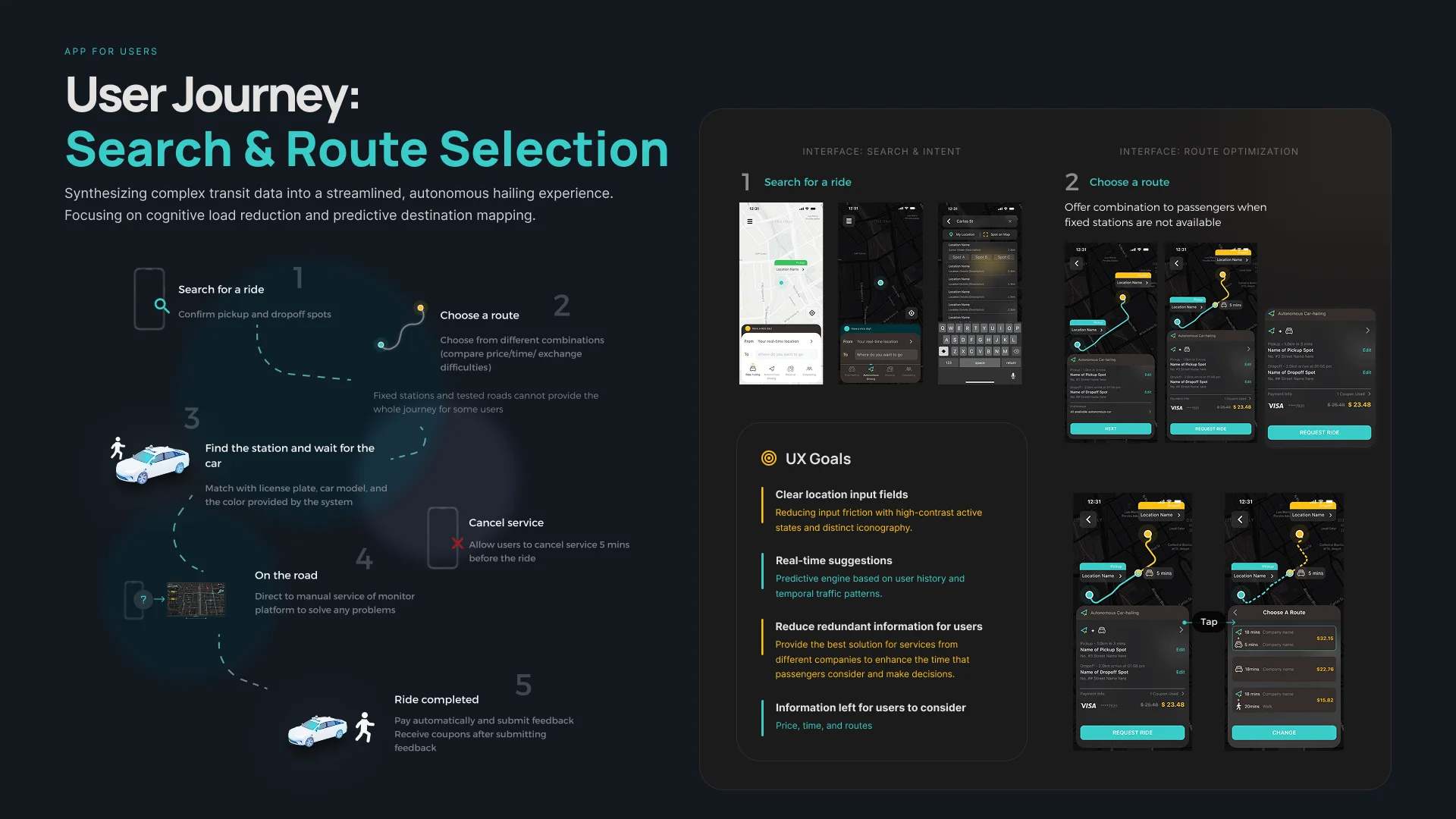
Difference between autonomous and conventional ride services
Interface
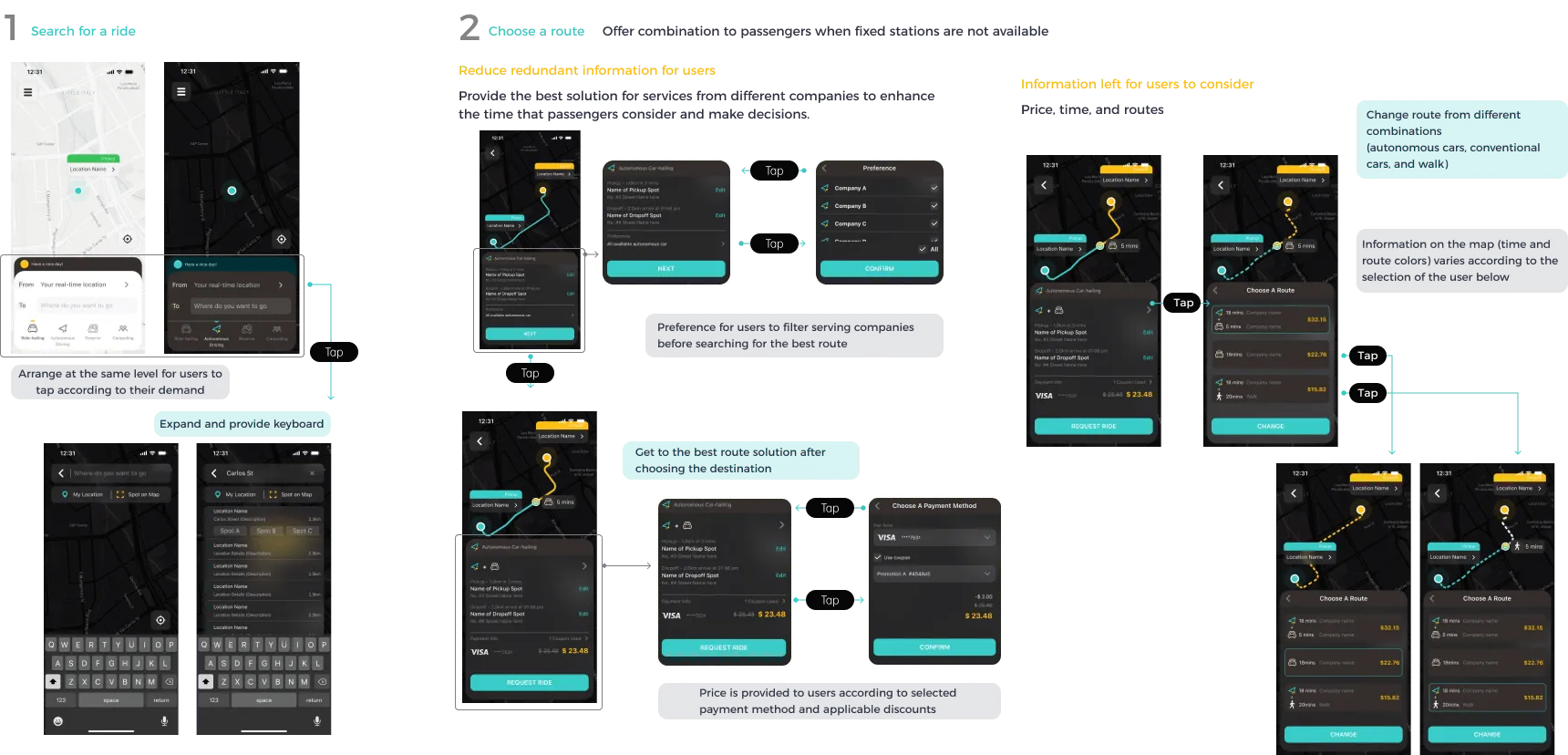
Autonomous ride-hailing services are designed as a built-in feature within existing ride-hailing apps.
To maintain familiarity and reduce user friction, the basic request flow remains similar to traditional ride services.
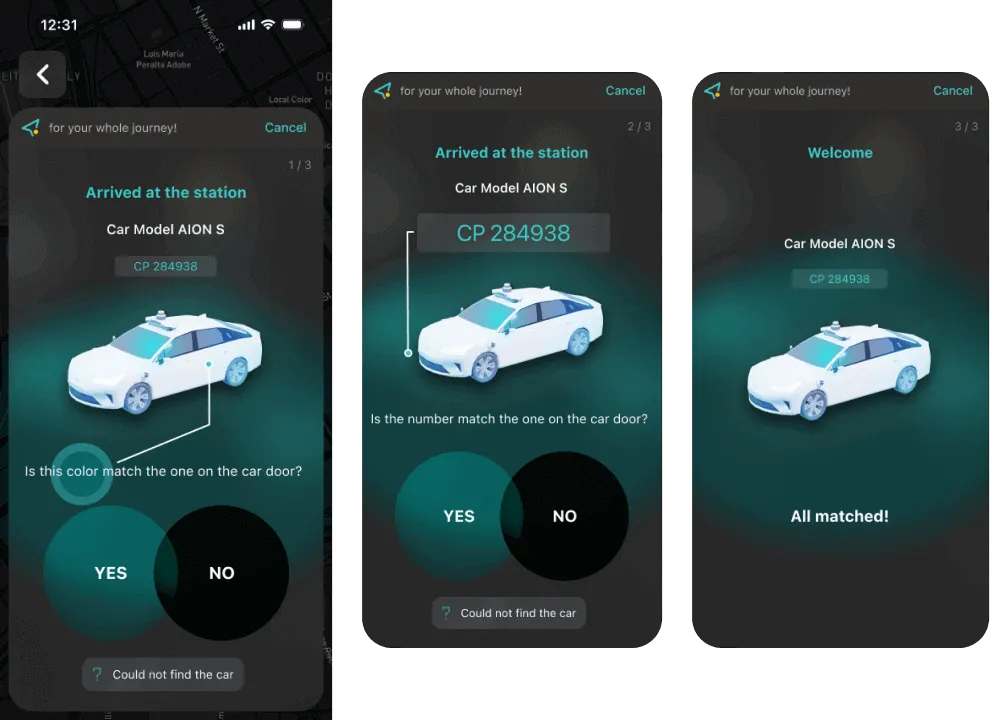
Matching the vehicle
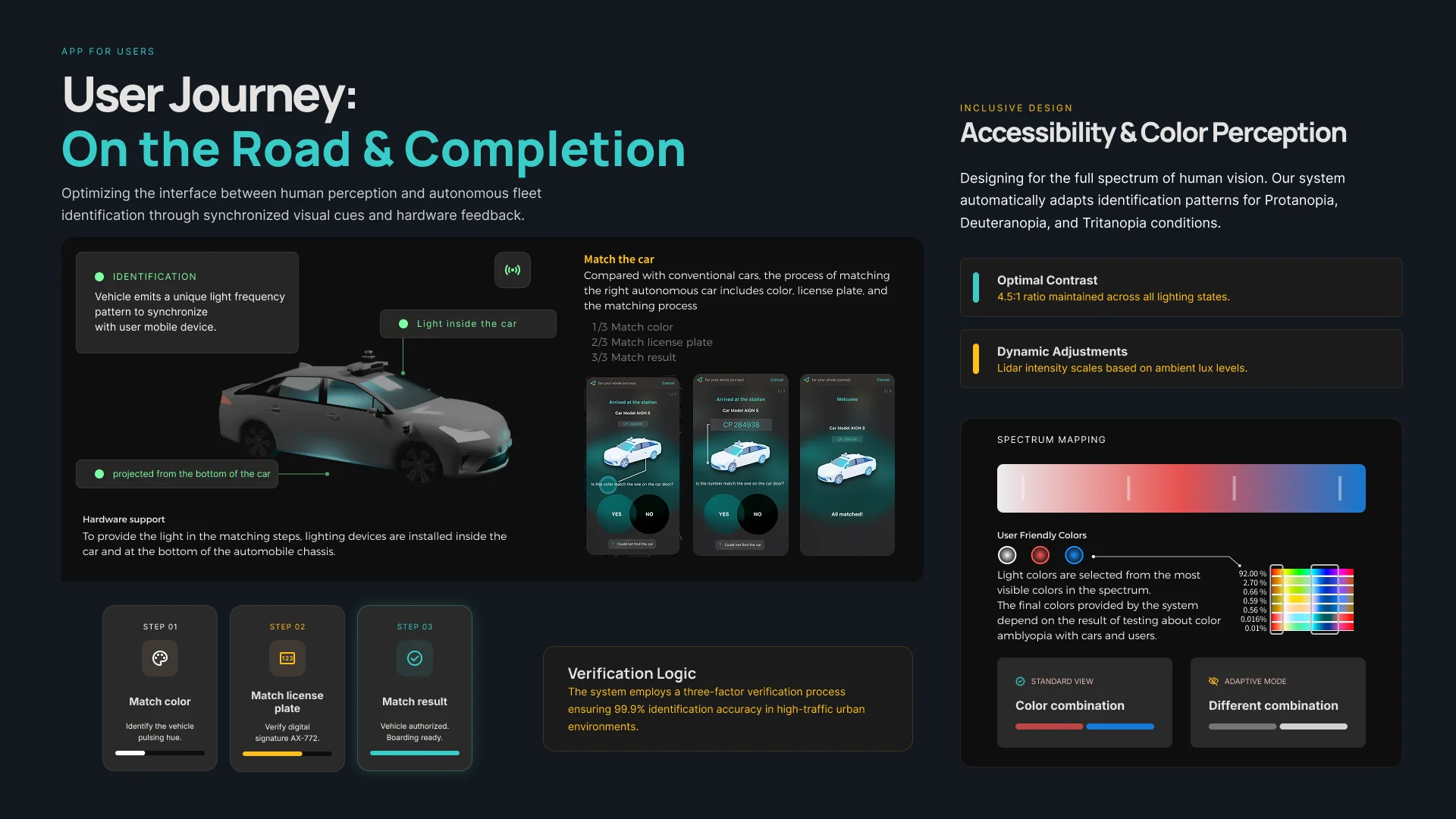
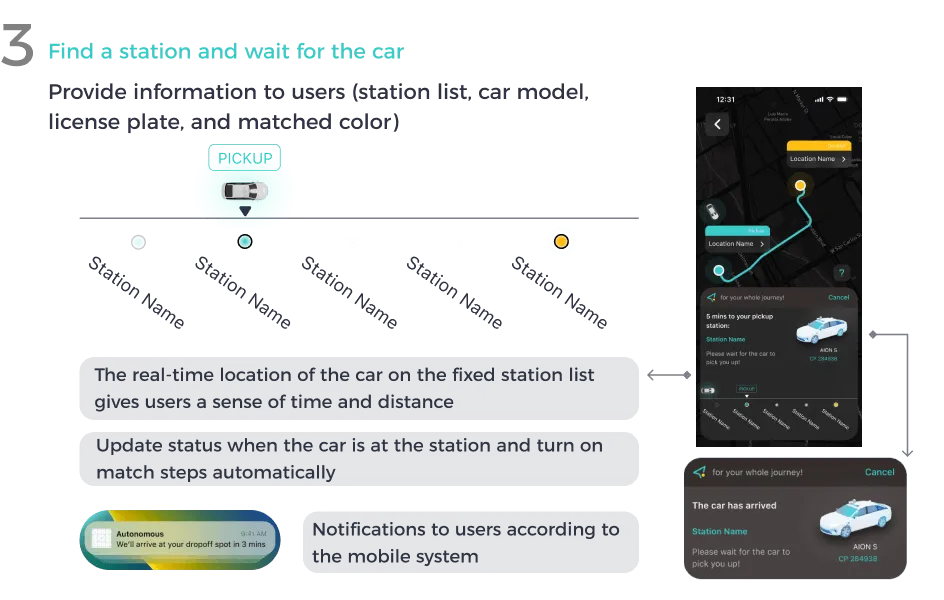
Compared with conventional vehicles, autonomous vehicle matching requires additional confirmation steps.
Steps include:
- Match vehicle color
- Match license plate
- Confirm matching result
Hardware support
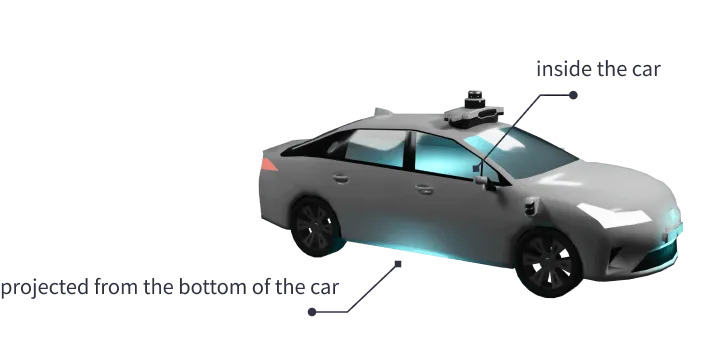
To assist users during the matching process, lighting devices are installed inside the car and underneath the chassis.

On the Road
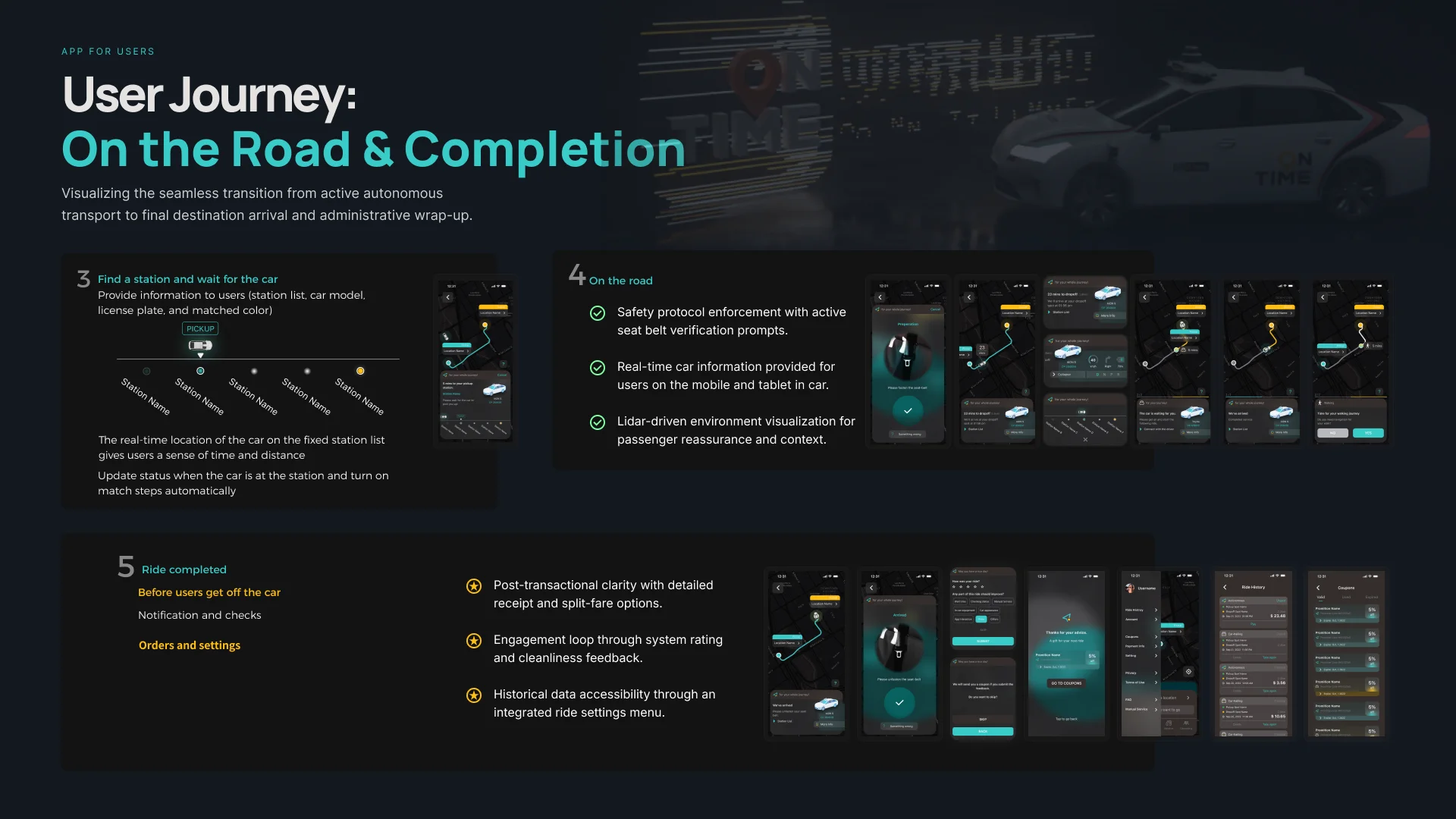
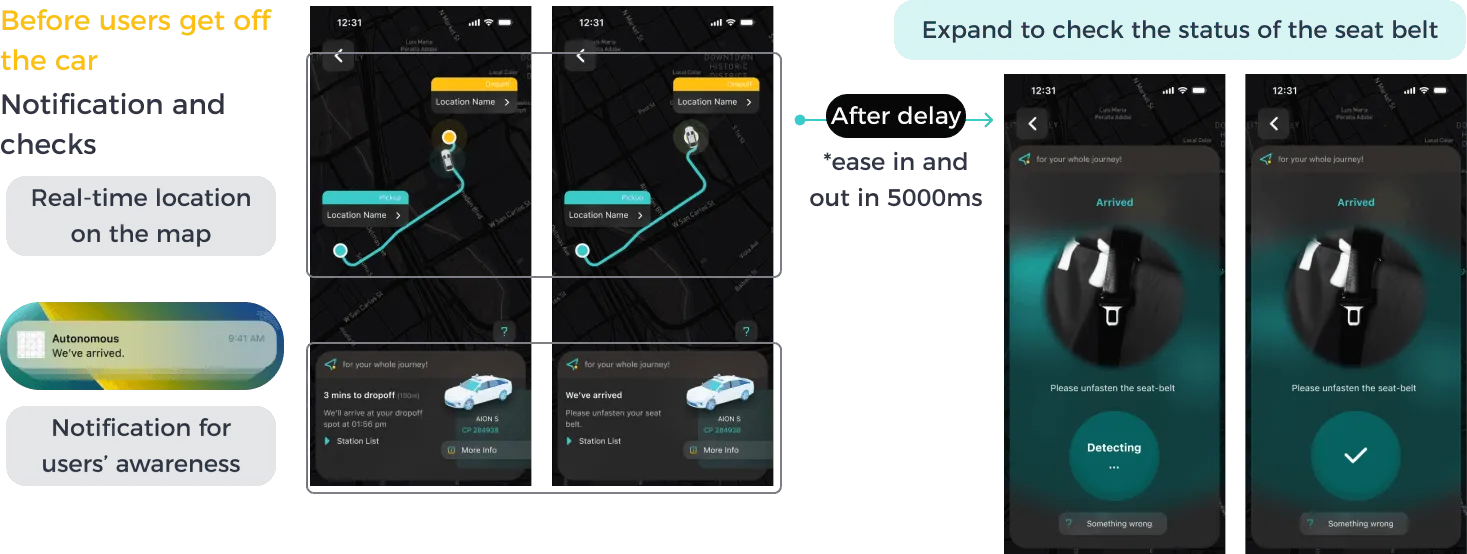
Seat belt status is detected automatically when users enter the vehicle.
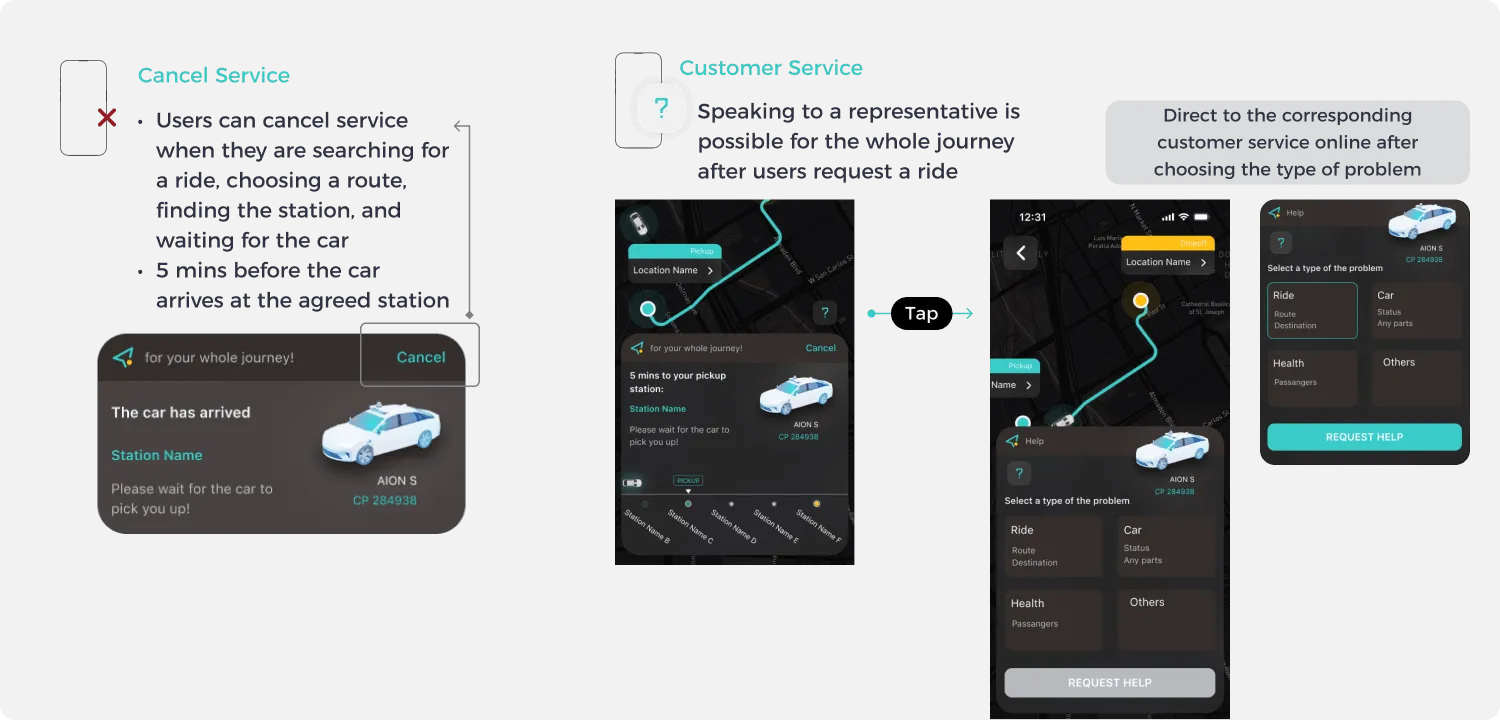
Users receive real-time status updates from both:
- the mobile application
- the in-vehicle tablet
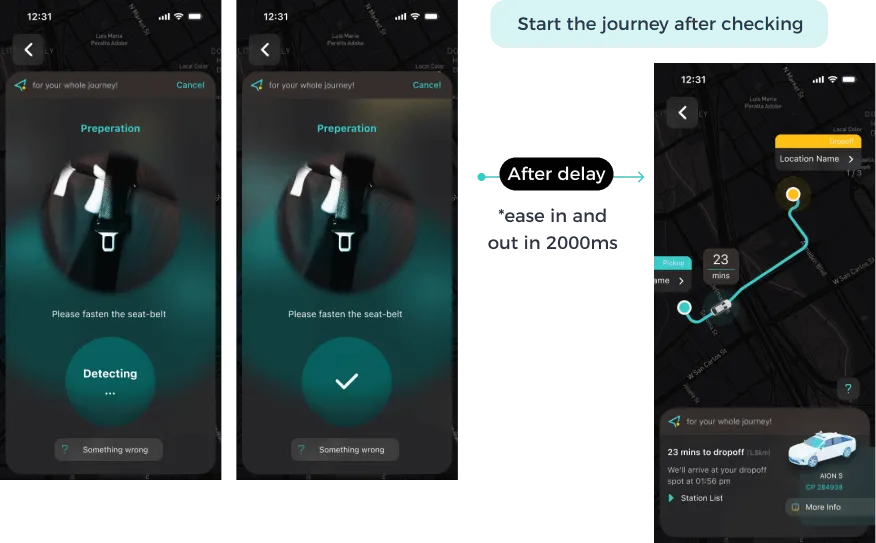
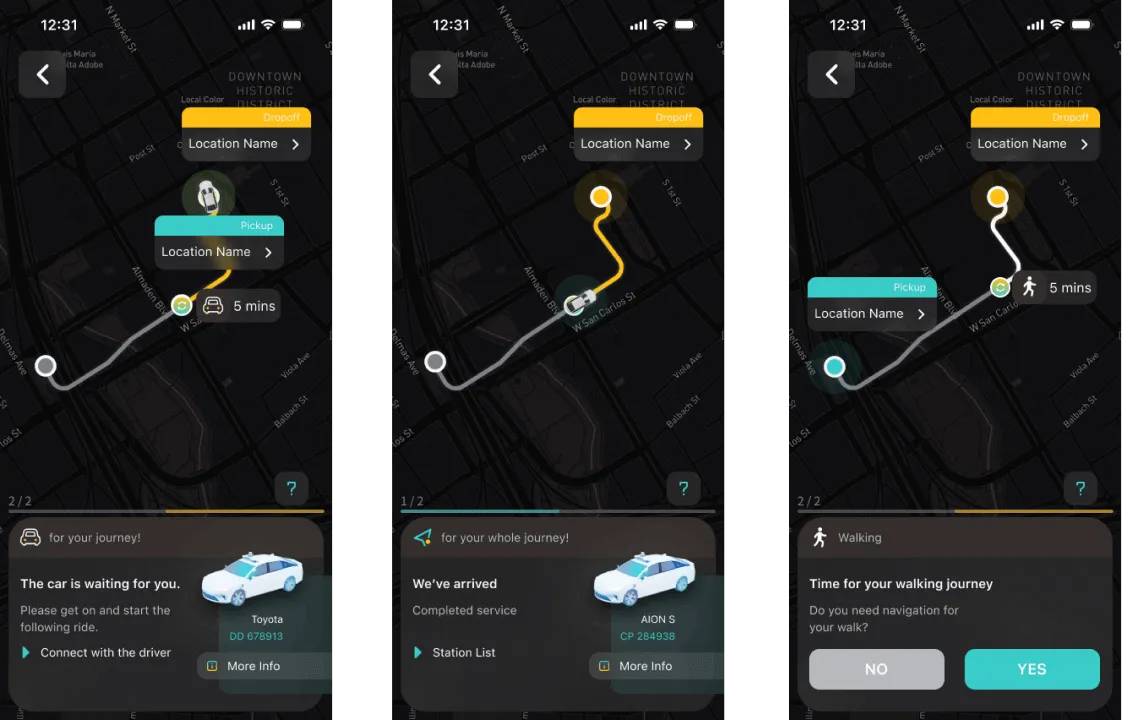
Real-time vehicle location and travel status are displayed to passengers.
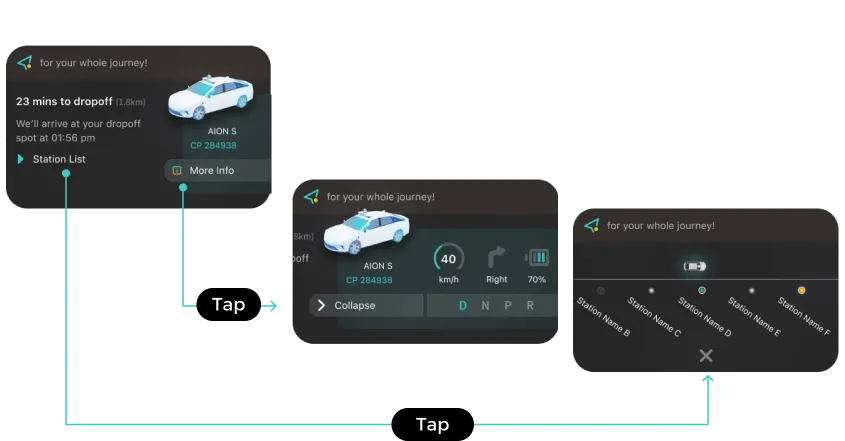
Transfer guidance can also be provided if additional travel steps are required.
Ride Completed
Work Progress
Interface and interaction prototype

3D Models
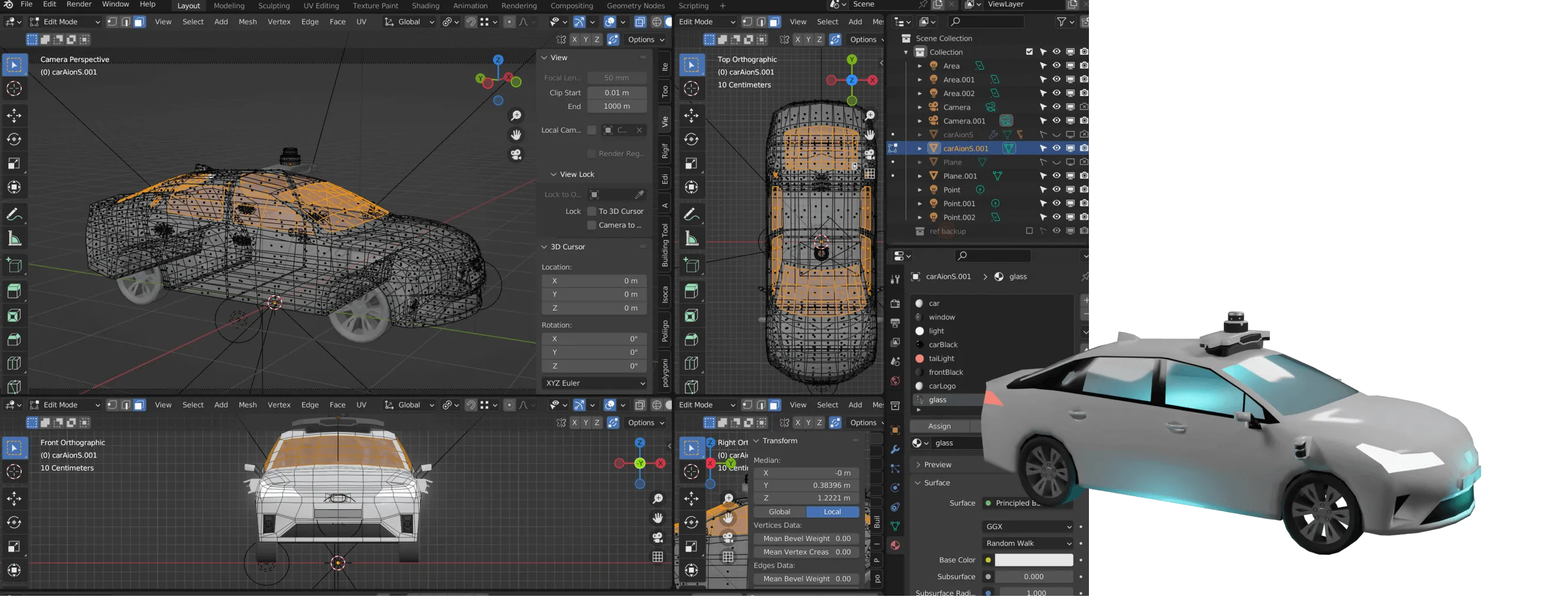
3D vehicle and interaction elements were designed in Blender.