Overview
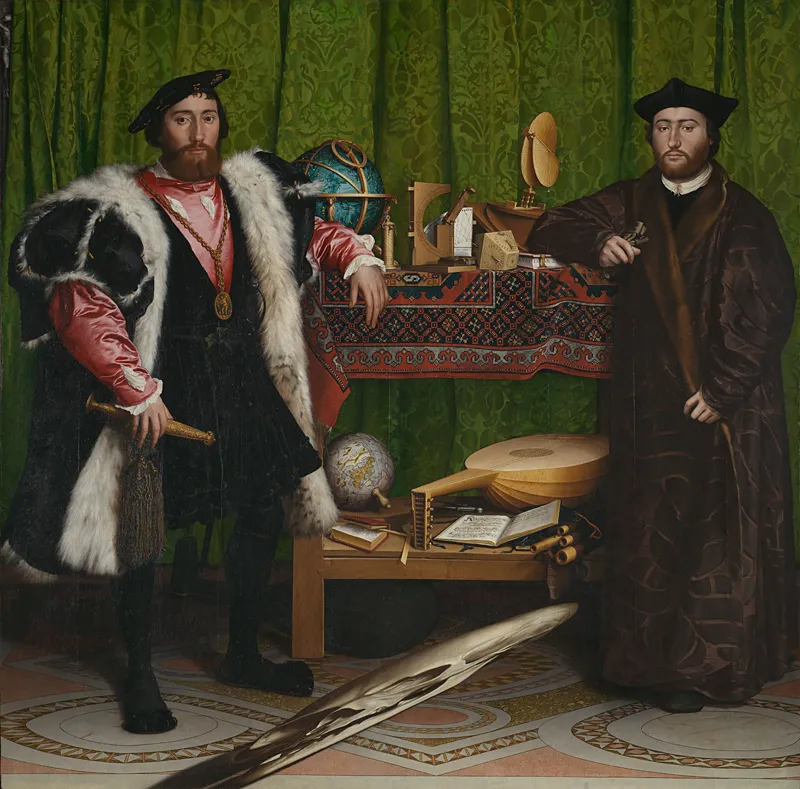
This prototype explores Gaussian Splatting (GS) as a method for translating historical perspective into interactive digital space. Using Hans Holbein’s The Ambassadors (1533) as a case study, the project investigates how point-based rendering can reinterpret a static painting as a navigable spatial experience.
The original artwork is known for its anamorphic skull, which only becomes visible from a specific viewing angle. This built-in requirement for viewer movement aligns naturally with GS, which allows scenes to be explored dynamically through real-time viewpoint changes.
Capture and Reconstruction
The painting was reconstructed using two parallel approaches:
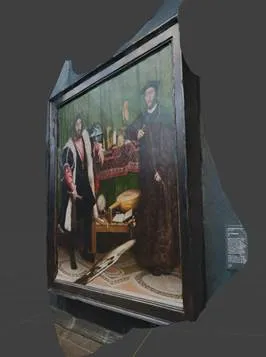
- 3D scanning (Polycam) — mesh-based reconstruction exported as GLTF
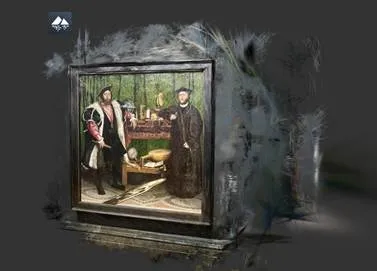
- Gaussian Splatting (Postshot Desktop) — point-based reconstruction exported as PLY
Both datasets were captured in person at the National Gallery, London, using the same mobile phone camera and identical image sequences to ensure a comparable workflow.
The comparison revealed key differences:
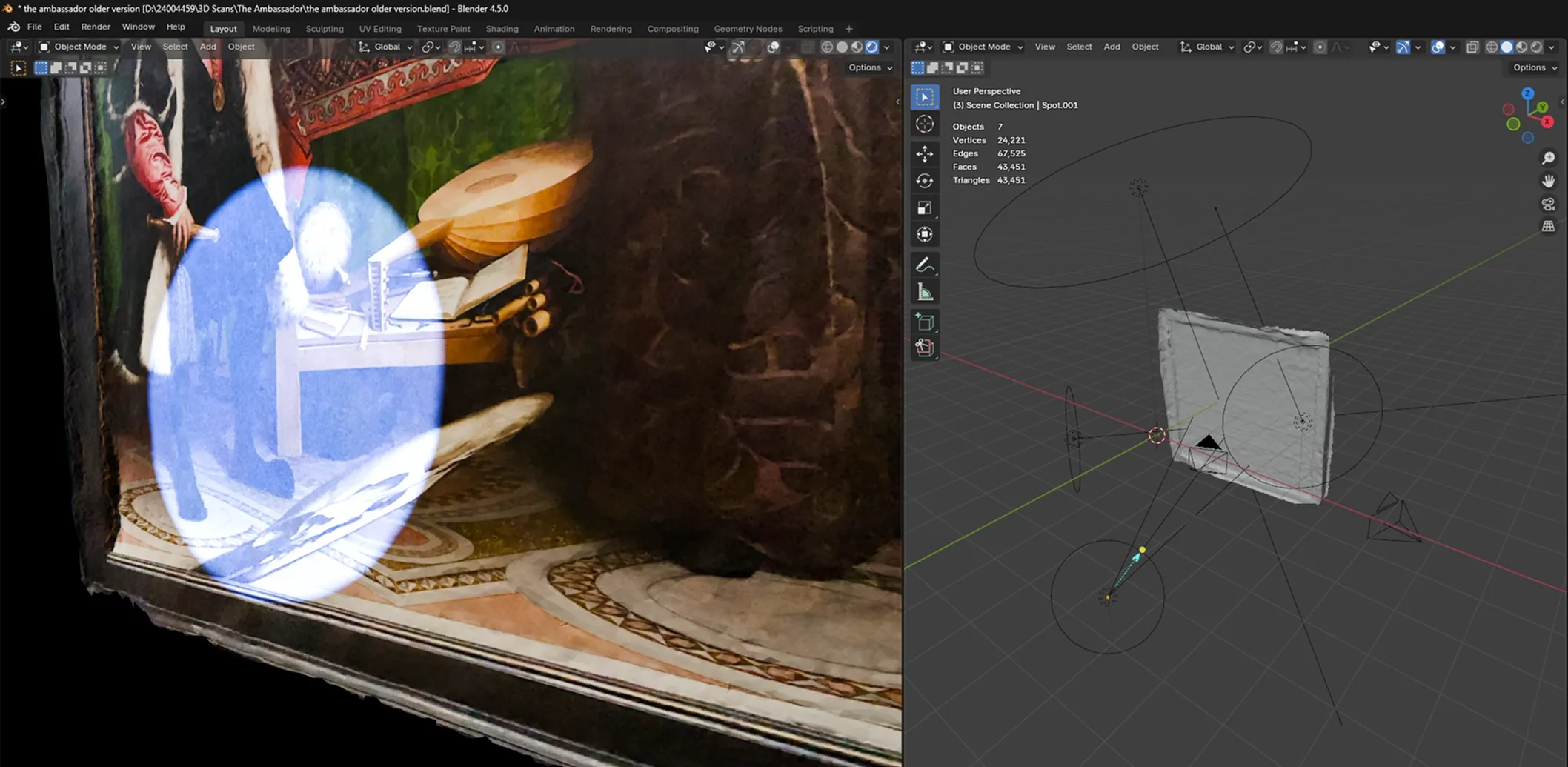
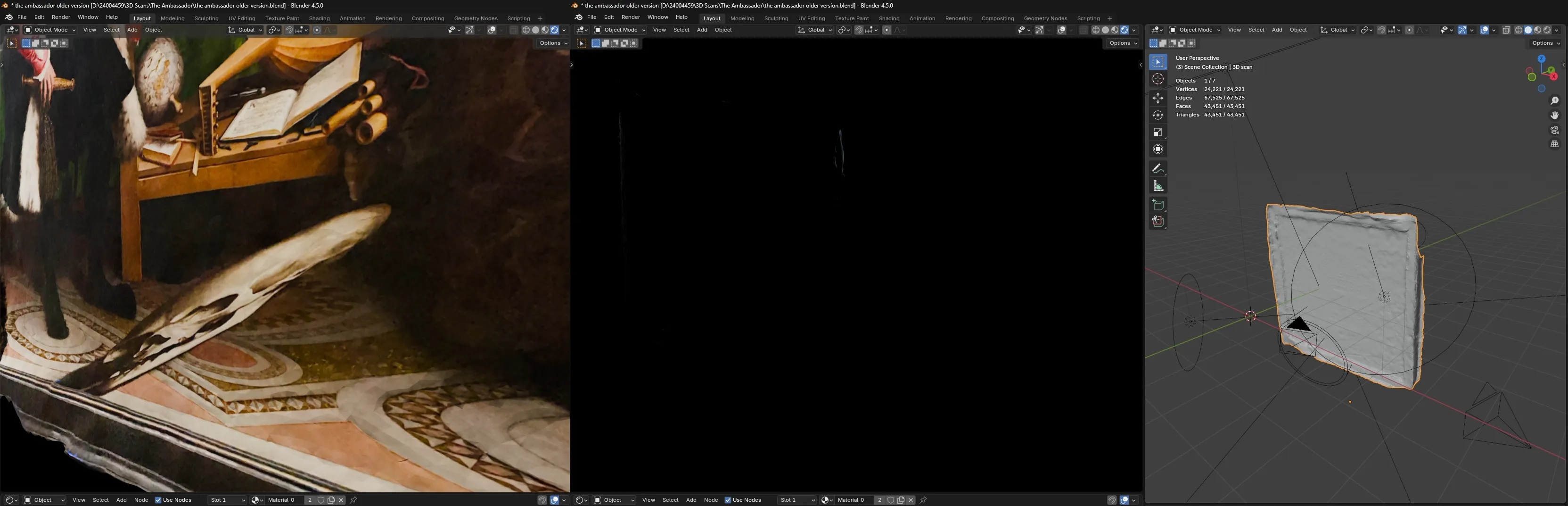
- Mesh-based scanning produced reflective artefacts from the protective glass.
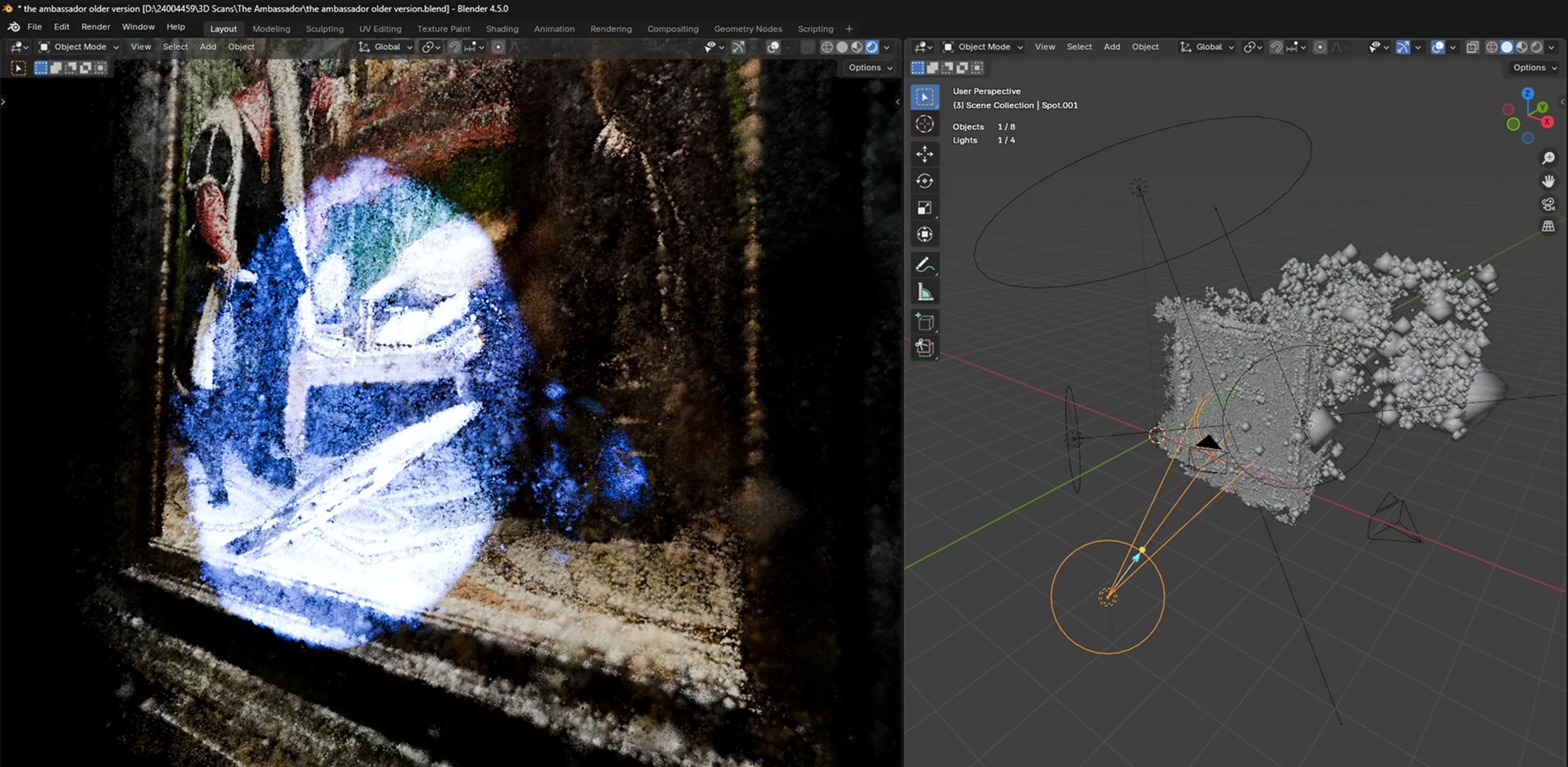
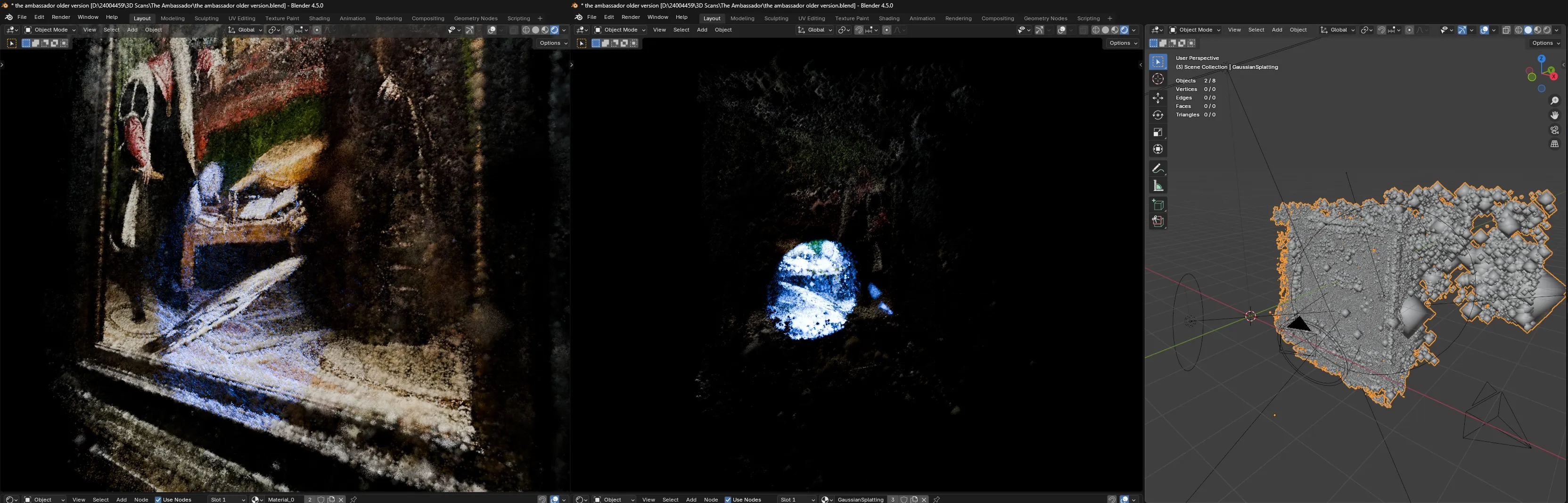
- Gaussian Splatting preserved spatial detail more effectively and reduced visible glare.
Spatial and Lighting Behaviour
Unlike traditional polygon models, GS represents scenes as volumetric point clusters containing colour, opacity, and depth information. This structure enables:
- smoother lighting transitions
- more continuous depth perception
- subtle atmospheric gradients
- light diffusion through spatial clusters
Lighting experiments showed that GS produced softer and more immersive illumination compared with mesh-based rendering, which tends to generate sharper shadows and isolated highlights.
Artistic Interpretation
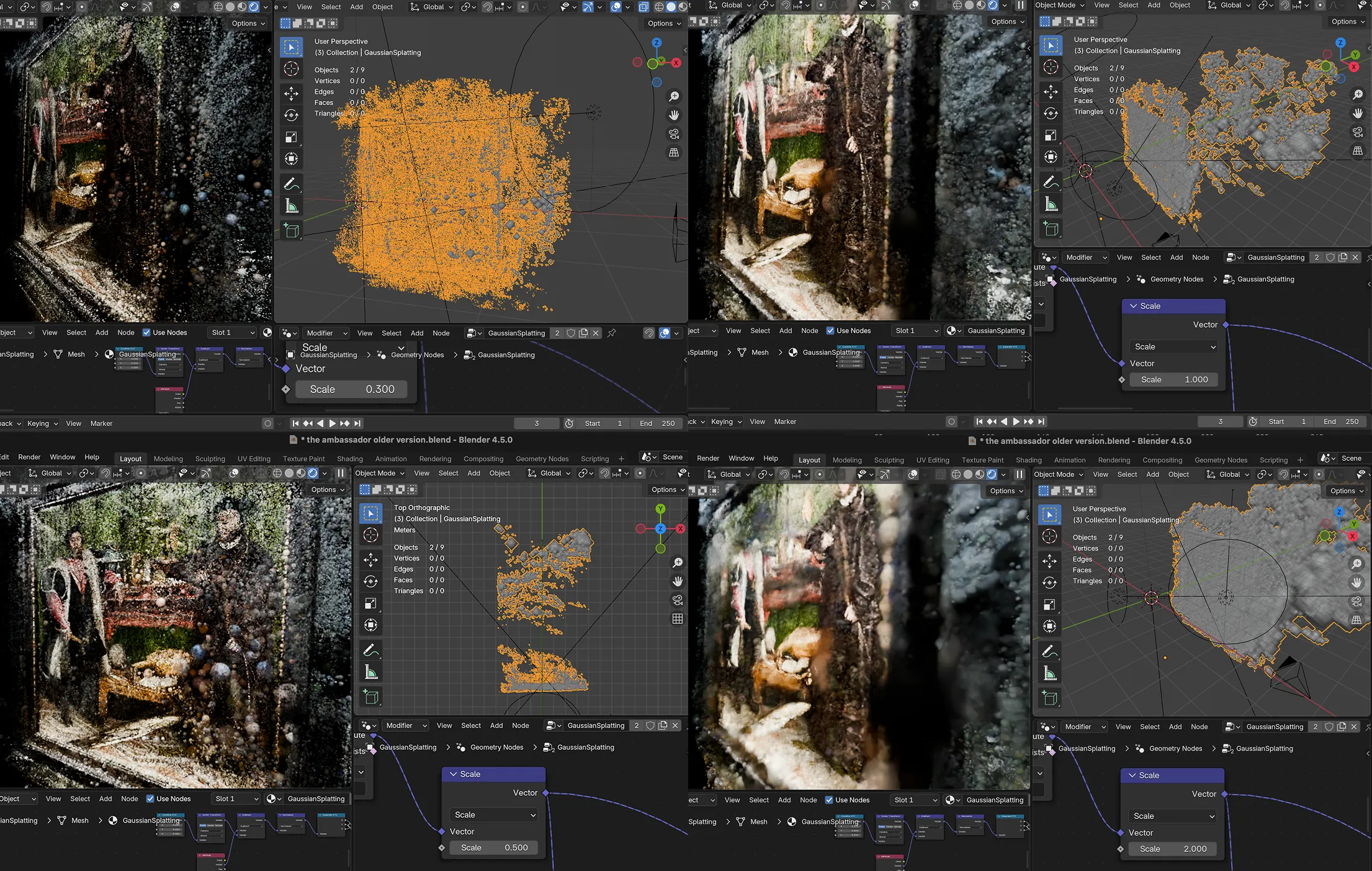
The GS output required manual refinement, including the removal of noise and stray point clusters. This process revealed an important shift in authorship: instead of modelling surfaces, the artist curates density, light, and spatial emphasis within a volumetric field.
Creative decisions therefore occur across several stages:
- image capture and camera consistency
- dataset cleaning and point refinement
- lighting configuration and atmosphere
- spatial composition and viewer perspective
GS automates reconstruction, but artistic judgement remains central.
Reflection
This prototype demonstrates how Gaussian Splatting can extend historical perspective techniques into immersive digital environments. By combining physically grounded rendering with spatial exploration, GS provides a new framework for visual storytelling that connects technical reconstruction with artistic perception.